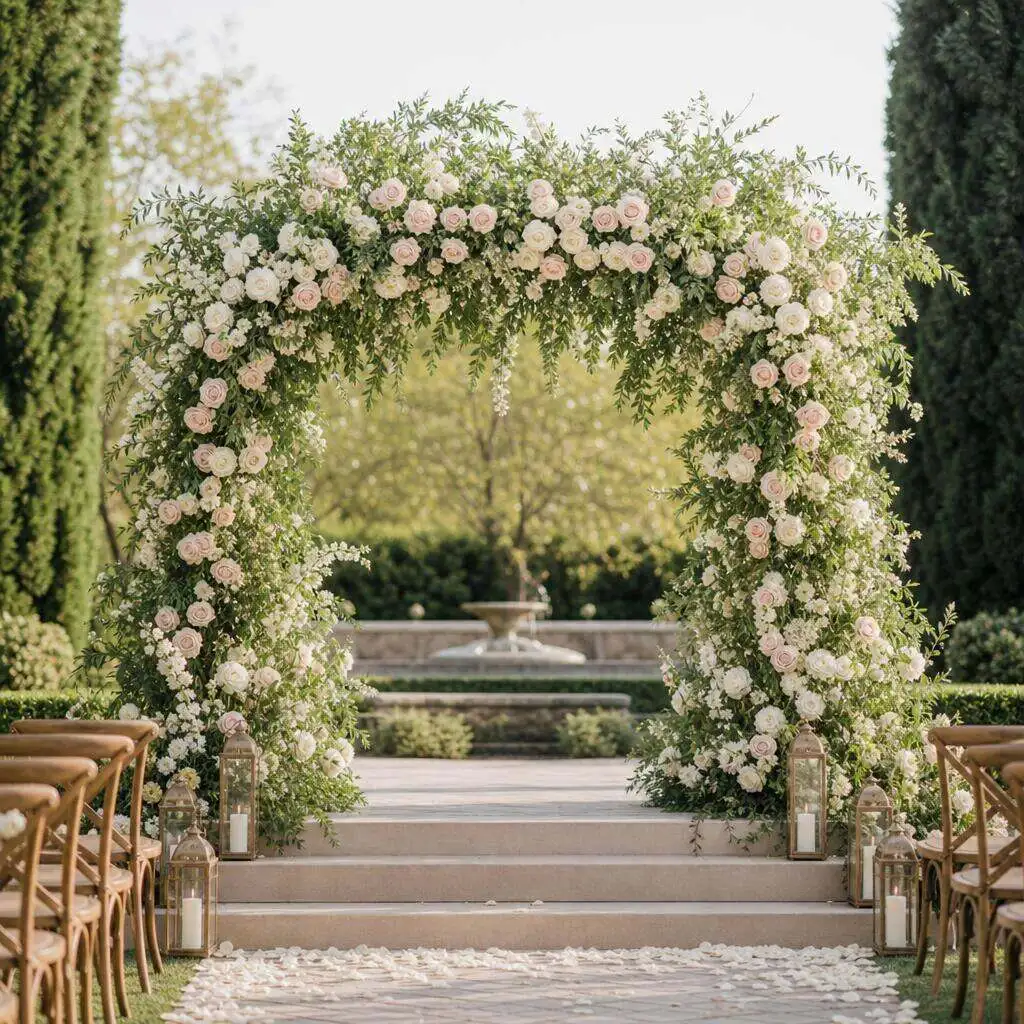
An Orthodox Christian wedding is a service rich with beauty, and flowers can frame that beauty with grace when they are planned in close conversation with the church. Practices vary meaningfully among Greek, Antiochian, Russian, Serbian, and other Orthodox traditions, and from one parish and family to the next, so this guide leans on questions rather than assumptions.
The crowning, in which stefana are placed on the couple, is part of many Orthodox weddings, and the ritual items connected to it are provided by the couple or the church, not by the florist. Flowers complement these moments; they never replace or stand in for them. Understanding that boundary is the first step in designing well.
Because customs vary by tradition, parish, region, and generation, we treat the priest as the guide to the sanctuary and the family as the teacher of what matters to them. This guide focuses on practical florist help: coordinating with clergy, respecting the altar and iconostasis, and planning ceremony and reception flowers that support the day.
Overview
About This Celebration
An Orthodox wedding centers on a service held in the church, followed by a reception. Because the sanctuary is a sacred space, the areas around the altar and the iconostasis need the priest's guidance, and what is welcome can differ from one parish and tradition to another. We begin every plan by asking the church rather than assuming.
Flowers in an Orthodox ceremony are supportive by nature. They can grace the entrance, the aisle, and areas the priest approves, and they can beautifully accompany the crowning, but the ritual items themselves come from the couple or the church. We are careful never to design anything that could be mistaken for a sacred object or interfere with the service.
The reception is often where floral design has the most freedom, and where families frequently choose to concentrate their flowers. Since traditions and preferences vary widely, we listen closely, confirm what the parish welcomes, and shape a plan that honors both the church and the family.
Our starting point
Begin With the Family
Before we suggest a single stem, these are the questions we ask — because your family is the authority on your traditions.
- 01Which parish and Orthodox tradition is the wedding within, and has the priest been consulted about flowers in the church?
- 02Will the crowning be part of the service, and are the stefana and related items being provided by the couple or the church?
- 03How do you picture the ceremony flowers, and how much of the budget belongs to the reception?
- 04Are there family members you would like to honor with personal flowers?
- 05Do you have a palette in mind, or colors and flowers that carry meaning for your family?
- 06Are there any flowers or colors you would prefer to avoid?
Floral opportunities
Where Flowers Can Live
Church entrance and doors
A welcoming arrangement greets guests as they arrive and usually has more freedom than the areas near the altar.
Aisle and pew ends
If the parish welcomes it, gentle markers guide the eye toward the front; ask the priest about placement and whether they must be freestanding.
Solea and altar surroundings
Only with the priest's approval and guidance; anything here must respect the sanctuary and never crowd the service or the iconostasis.
Crowning area accompaniment
Flowers may softly frame the space where the crowning takes place, complementing but never replacing the stefana the couple or church provides.
Bridal bouquet and personal flowers
The couple's flowers, plus corsages and boutonnieres for parents, sponsors, and honored family.
Reception entrance
A statement piece welcomes guests and sets the tone as the celebration moves from church to hall.
Head table or sweetheart table
A focal arrangement anchors where the couple sits and draws photographs throughout the reception.
Guest table centerpieces
Low or elevated arrangements that keep sightlines open and carry the palette across the room.
Cake table
A cluster or garland frames the cake and gives a natural photo moment during the reception.
Palette
Color & Design Considerations
Orthodox couples choose palettes as varied as any other, so we start with the family's taste rather than any assumed color. Soft whites and ivories are a frequent choice for the ceremony's serene feel, but rich jewel tones, blush, and deeper hues all suit the setting depending on the couple. We shape color around the family, never a template.
Because the church is a place of visual richness, with icons, candles, and ornamentation, we design flowers that harmonize rather than compete. In the sanctuary that often means restrained, elegant pieces scaled to the space and placed only where the priest approves. The reception typically allows more expressive design.
Texture and shape carry a lot of the mood. Classic roses, hydrangea, lisianthus, and greenery read as timeless and gentle, while dahlias, ranunculus, and seasonal blooms add movement. When a couple wants the ceremony and reception to feel connected, we thread a shade or a signature flower through both.
If the couple or their families associate certain flowers or colors with the celebration, we can honor those preferences thoughtfully. The aim is a palette that feels like the couple, sits gracefully in a sacred space, and photographs beautifully in both settings.
Bring these questions to your family conversation
- Do you picture a soft neutral palette, or richer color for the day?
- Should the ceremony and reception flowers feel closely connected?
- Are there flowers that carry meaning for you or your families?
- Are there colors or blooms you would prefer to avoid?
- How formal or relaxed do you want the overall look to feel?
- Do you want the bridal bouquet to be a focal statement or more understated?
- Are there family members whose personal flowers should stand out?
- Would you like fragrance to be a feature, or kept subtle in the church?
Planning around the calendar
Michigan Seasons & Your Venue
Spring
Tulips, ranunculus, peonies as the season peaks, and lilac bring lush options; Michigan spring can swing cool, so plan outdoor photos with flexibility.
Summer
Garden roses, hydrangea, and dahlias are abundant, but summer heat asks that ceremony and reception pieces be built and placed close to the event.
Fall
Dahlias, later hydrangea, and rich foliage suit deeper palettes; crisp days ease transport between church and reception.
Winter
Roses, ranunculus, amaryllis, and evergreen accents carry the season; protect arrangements from cold cars and drafty church doorways.
Orthodox weddings usually hold the ceremony indoors in the church, where temperatures are steady, so the key concern is the transition to the reception. Moving arrangements from a cool car into a warm church, then on to a hall, is where flowers get stressed, so we plan timing and handling to keep pieces fresh across a full day.
If any part of the celebration is outdoors, whether photos or an outdoor reception, Michigan weather asks for a plan. Summer sun and heat can tire delicate blooms, so we favor resilient flowers and keep pieces shaded until they are needed. In colder months, we shield arrangements from freezing air and keep them clear of drafty entrances.
For the reception, we ask early about the room: ceiling height, table sizes, whether there is a head table or a focal wall, and how long flowers must look their best. Knowing the space lets us build arrangements that hold up beautifully from the first guest through the last dance.
Making choices with impact
Where Flowers Matter Most
Because the sanctuary belongs to the parish and the ceremony's beauty is largely its own, many Orthodox couples find their flowers make the strongest impression at the reception, where guests spend the most time. Concentrating design where people gather gives the day its warmth without spreading arrangements thin across a space that is already visually rich.
Repurposing is one of the best ways to stretch impact. Arrangements that grace the church entrance or the aisle can often move to the reception to anchor the head table, the entrance, or the cake display. When we plan for pieces to travel, we build them to be sturdy and quick to reset.
Scale choices shape the feel and the impact. A few generous focal arrangements, at the reception entrance and the couple's table, often read more memorably than many small pieces scattered around. We help couples decide where to be bold and where a lighter touch will do.
Personal flowers carry meaning far beyond their size. The bridal bouquet and the corsages and boutonnieres for parents, sponsors, and honored family are close to the couple in every photograph, so they reward thoughtful attention.
Your family's traditions and preferences deserve to be heard. Share the details that matter to you, and Bentley Florist will help explore floral ideas that respectfully support your celebration.
Conversation guides
Questions Worth Asking
For your family
- Which parish and Orthodox tradition is the wedding within?
- Has the priest been consulted about flowers in the sanctuary?
- Will the crowning be part of the service, and who provides the stefana?
- How do you want to balance ceremony and reception flowers?
- Are there parents, sponsors, or family members to honor with personal flowers?
- Is there a palette or flower that carries meaning for your families?
- Are there colors or blooms you would prefer to avoid?
- Should any ceremony pieces be built to move to the reception?
- Are there fragrance sensitivities or allergies among close family?
- Who will transport and place flowers between the church and reception?
- How formal or relaxed do you want the overall look to feel?
- Is there anything about your family's traditions that would help us design respectfully?
For your venue or house of worship
- Are flowers permitted in the sanctuary, and where may they be placed?
- What guidance does the priest have about the altar, solea, and iconostasis areas?
- May flowers accompany the area where the crowning takes place, and how?
- Are aisle or pew arrangements welcome, and must they be freestanding?
- Are there restrictions during particular liturgical seasons?
- What time may we access the church to set up beforehand?
- Who at the parish should we coordinate with on the day?
- Are there candles, icons, or fixtures we must keep flowers clear of?
- When must arrangements be removed after the service?
- Are there photography or placement rules during the ceremony itself?
Learn from experience
Planning Mistakes to Avoid
Not consulting the priest early
The sanctuary, altar, and iconostasis need clergy guidance. Asking early keeps plans from needing last-minute changes on the wedding day.
Blurring flowers with ritual items
The stefana and other sacred items come from the couple or the church. Flowers complement these moments and must never replace or imitate them.
Assuming one Orthodox tradition matches another
Greek, Antiochian, Russian, Serbian, and other traditions differ. We ask about the specific parish and family rather than generalizing.
Overpowering a visually rich sanctuary
Churches already carry icons, candles, and ornament. Oversized arrangements can compete; we scale to harmonize with the space.
Forgetting the church-to-reception handoff
Flowers get stressed in transit. Planning who moves pieces and when keeps them fresh across a long day.
Keep track
Your Planning Checklist
Ceremony planning
Reception planning
Logistics
FAQ
Common Questions
Related resources
Keep Exploring
Catholic Wedding
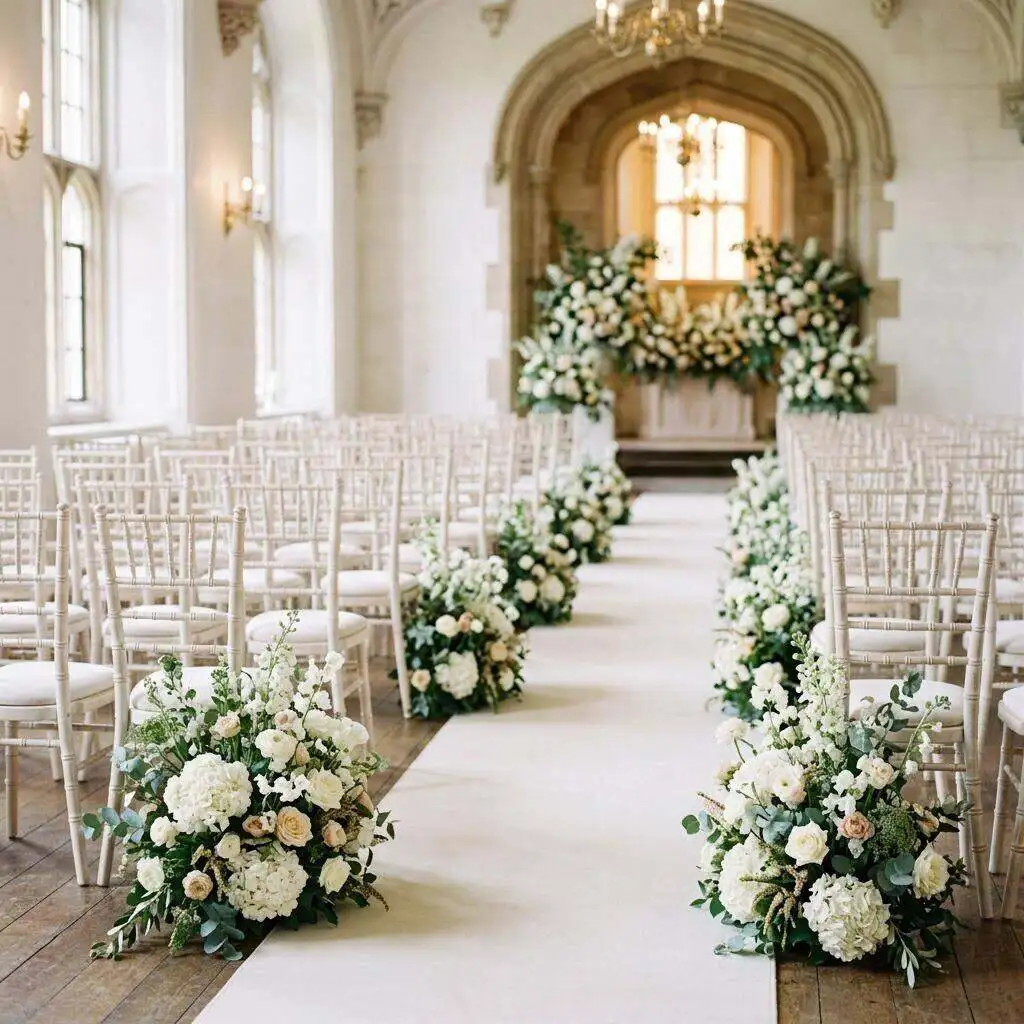
A practical guide to Catholic wedding flowers — altar and pew pieces within parish guidelines, personal flowers, and reception planning that flows from the Mass.
Interfaith Wedding
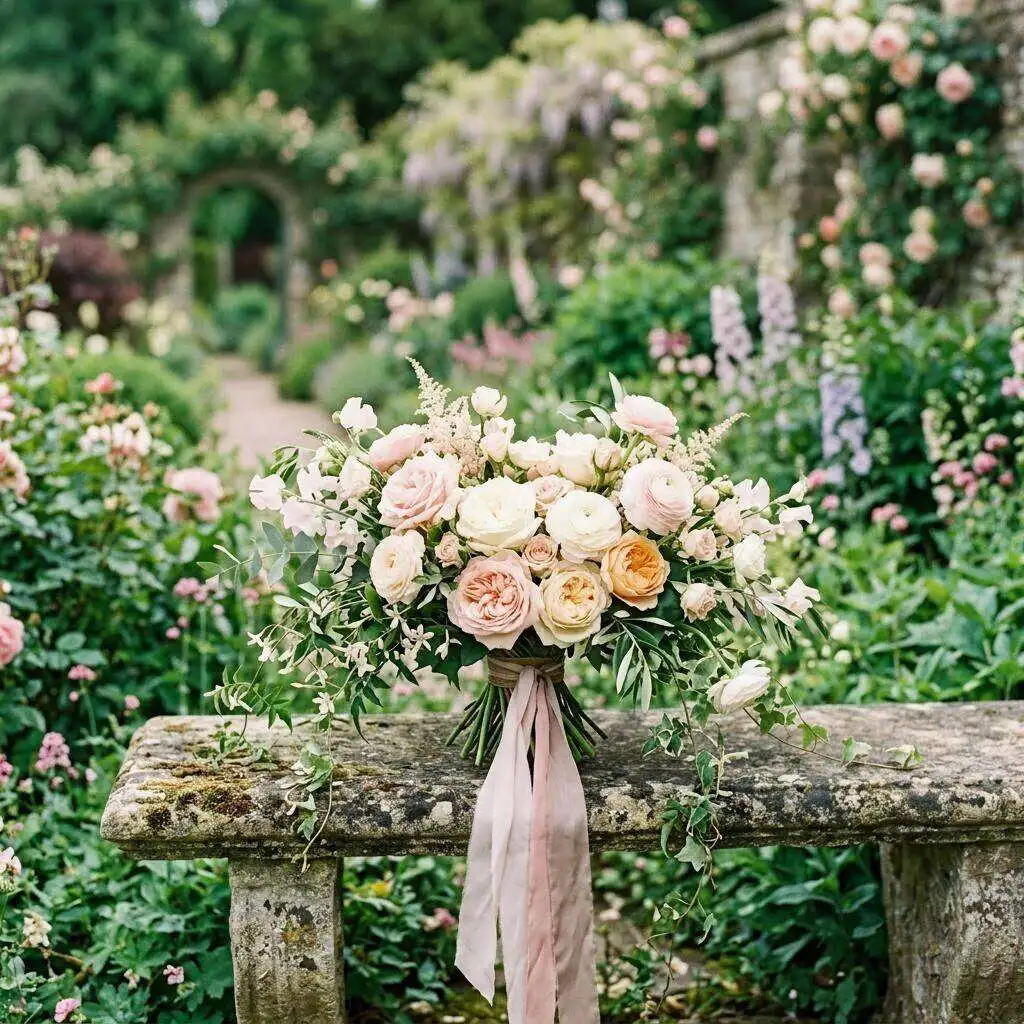
Floral planning for interfaith weddings — honoring two traditions in one celebration, from ceremony structures to family flowers, without assumptions.
Multicultural Wedding
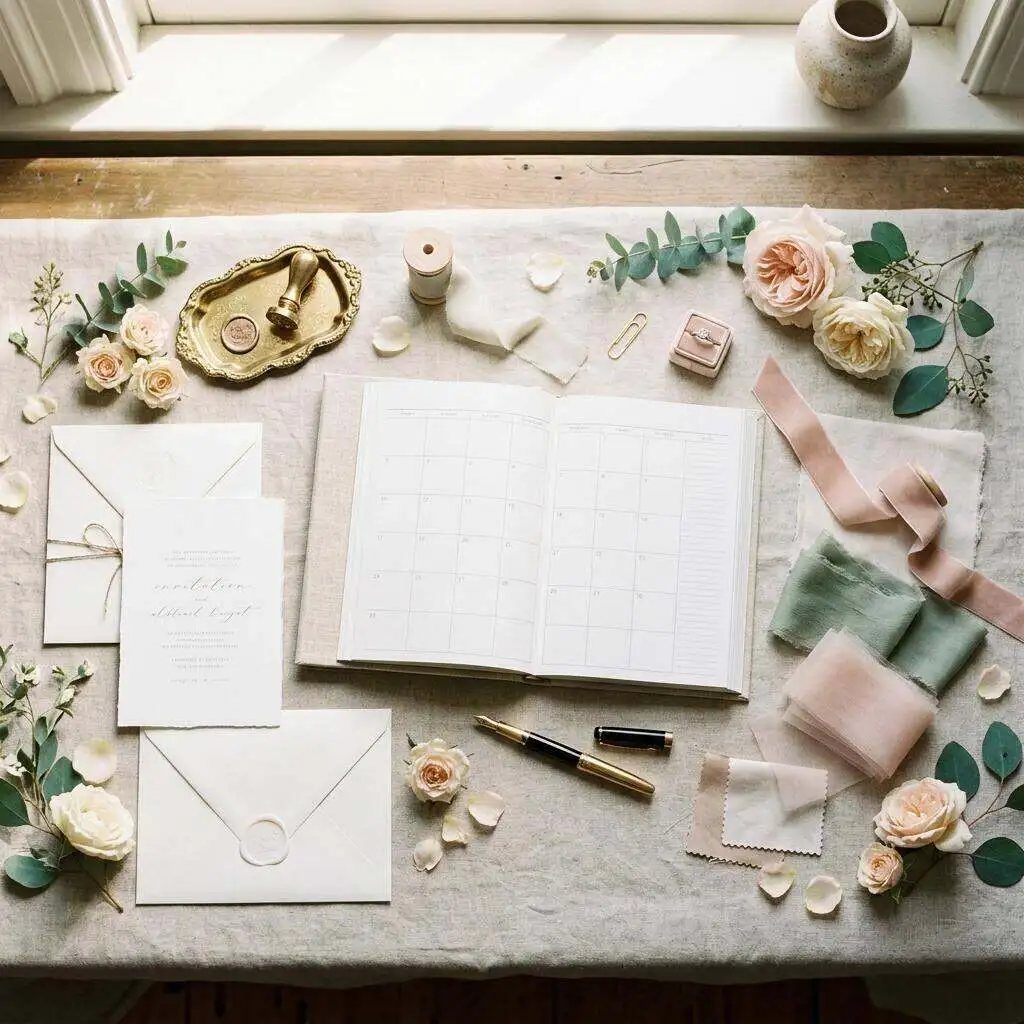
Planning flowers for weddings that blend two or more cultures — balancing traditions, coordinating multiple events, and keeping both families heard.
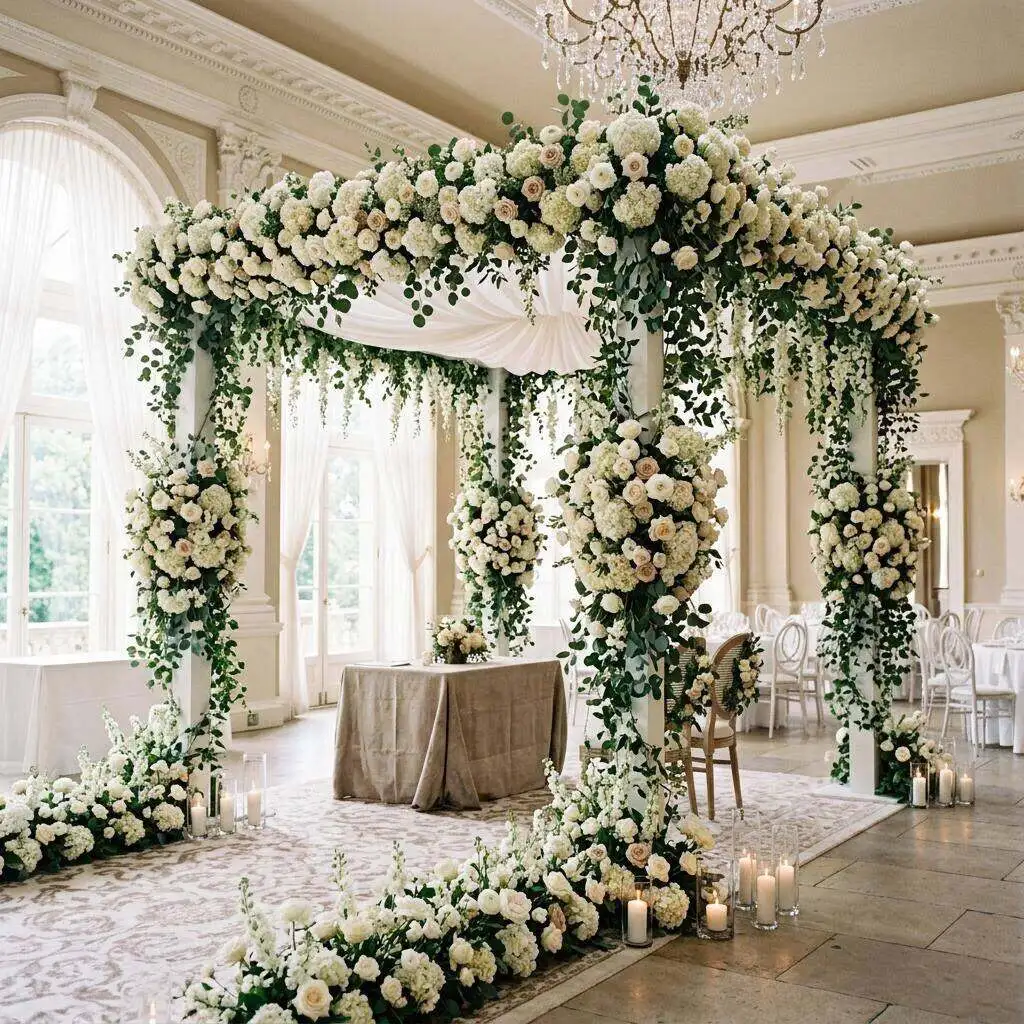
Jewish Wedding
Thoughtful floral planning for Jewish weddings — chuppah designs, ceremony and reception flowers, and questions for your officiant, venue, and family.
From the Flower Knowledge Center
Plan the whole celebration
Step-by-step planning help for this occasion — timelines, ideas, and checklists.
Written by the Burton Floral Design editorial team, presented by Bentley Florist. Published July 22, 2026 · Last updated July 22, 2026.
© Burton Floral Design, presented by Bentley Florist. All rights reserved. This guide may be shared in its original, unmodified form with attribution and a working link to BurtonFloralDesign.com. Content may not be republished, resold, altered, or represented as another organization's work without written permission.