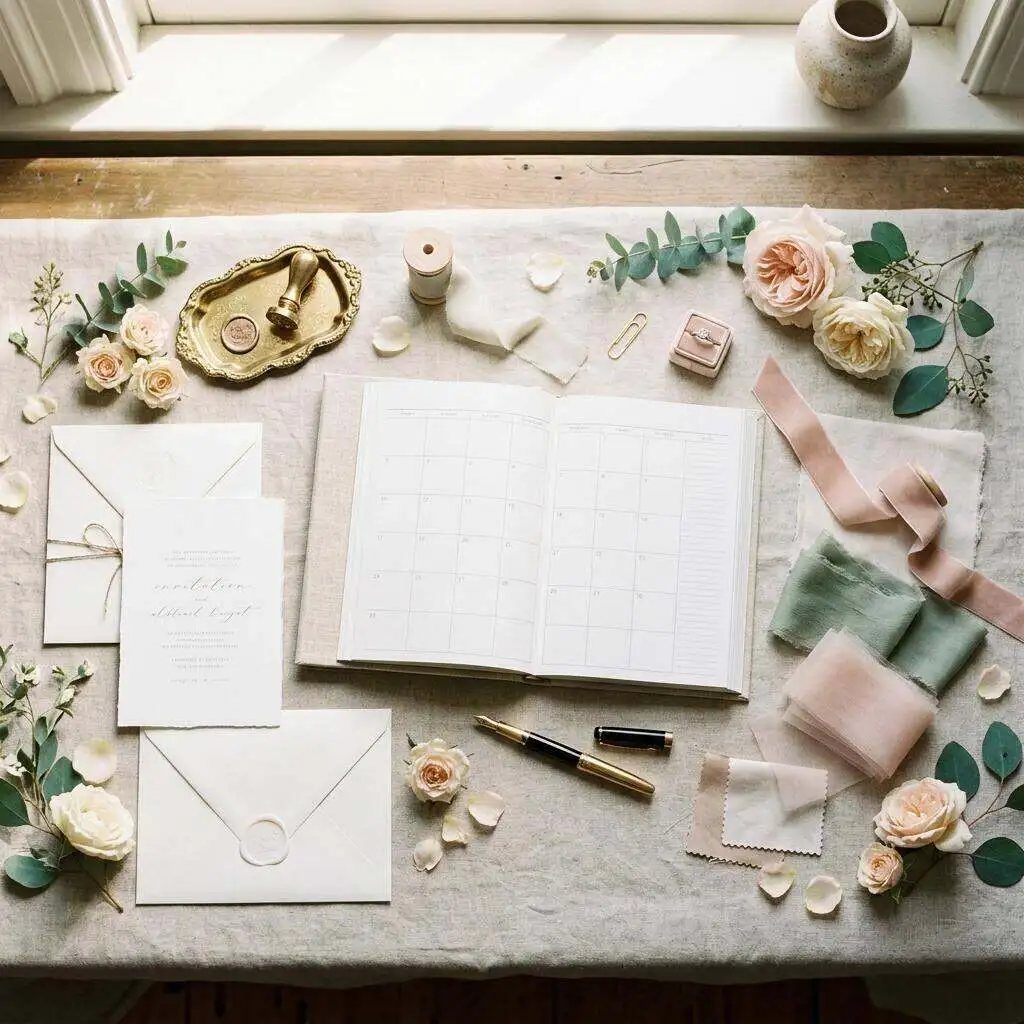
A multicultural wedding brings two heritages into one celebration, and the flowers get to hold both. When a couple blends different cultural or family traditions, the most beautiful results come from listening to each side and letting the design reflect what matters to both, rather than favoring one or flattening the differences.
Every family is different, and the customs that feel essential vary by family, faith, region, and generation, sometimes even within one household. What one side treasures may be new to the other, and both are worth honoring. We keep cultural preference separate from religious requirement, and inspiration separate from rules, so our questions stay respectful to everyone at the table.
This guide focuses on the practical work of blending: interviewing both families, weighting both traditions, and rehearsing the handoffs between ritual moments so nothing feels rushed or out of place. Bentley Florist, family-owned in Burton, Michigan since 1963, listens to both sides first and designs a celebration that feels like it belongs to the whole family.
Overview
About This Celebration
Blending traditions usually means more than one ceremony structure or more than one meaningful moment, and sometimes a single ceremony that draws from both. We start by interviewing both families so we understand what each side hopes to see, then look for ways the flowers can carry both voices without one drowning out the other.
Some couples weave the two heritages together throughout, sharing a palette and letting each tradition appear side by side. Others prefer distinct moments, where each side's customs are honored clearly in turn. Neither is more correct, and we design to whichever balance the couple and families choose.
The handoffs between ritual moments deserve special care in a blended celebration. When one tradition's element flows into another's, timing, placement, and the movement of flowers all matter. Rehearsing those transitions in advance keeps the day feeling seamless rather than stitched together.
Our starting point
Begin With the Family
Before we suggest a single stem, these are the questions we ask — because your family is the authority on your traditions.
- 01Which traditions does each side of the family hold, and which matter most to each of you?
- 02Are there ceremony elements from either tradition that flowers should support, and how prominently?
- 03How would you like both heritages reflected, whether woven together throughout or given their own moments?
- 04Are there flowers, colors, or fragrances that one side loves or that either side would prefer to avoid?
- 05Are there sensitivities between the traditions we should understand before suggesting anything?
- 06Who from each family should we coordinate with, and who makes the final design decisions?
Floral opportunities
Where Flowers Can Live
Ceremony structure or backdrop
A shared frame can hold elements of both traditions, or two treatments can honor each; we design to the couple's chosen balance.
Aisle and entrance
Petals, markers, or clustered stems guide the procession and can nod to both heritages in a unified path.
Welcome and greeting area
An arrangement where guests arrive sets a warm, inclusive tone for families meeting from both sides.
Family greeting or ritual moments
Where a tradition includes a greeting or exchange, flowers can mark it; we build worn pieces to be comfortable and secure.
Reception centerpieces
Table florals blend both palettes into one look, with heights that keep sightlines open across the room.
Head table or couple's backdrop
A distinct treatment behind the couple anchors toasts and photographs and can reflect both heritages.
Personal flowers
Bouquets, worn pieces, and boutonnieres tie the wedding party together while honoring details from each side.
Photo and lounge areas
Freestanding arrangements at photo spots let both families see their traditions represented in the setting.
Palette
Color & Design Considerations
We assign no fixed meaning to color and instead ask what each side of the family responds to. In a blended wedding, color is often where two heritages meet most gracefully, so we look for a palette that lets both feel present rather than choosing one over the other.
A shared thread helps the day cohere. That might be a repeated flower drawn from both traditions, a consistent green, or a signature accent that appears throughout. With a common thread in place, each tradition's distinct moments can still stand out while the celebration reads as one.
Certain flowers carry sentimental weight for one side or the other, and naming those early lets us build them in thoughtfully. We are glad to feature blooms that matter to either family, and we balance them so no single element overwhelms the shared design.
Texture and scale matter as much as color when blending. Different traditions may lean toward fuller or simpler looks, and we reconcile those tendencies so the flowers feel intentional to both families and hold up to handling, lights, and close photography.
Bring these questions to your family conversation
- Are there colors each side of the family especially loves, or any to avoid?
- Would you like the palettes woven together or given distinct moments?
- Is there a shared thread you would like to carry through the day?
- Are there flowers with sentimental meaning for either family?
- How full or simple would each side like the overall look to feel?
- Should the ceremony and reception share a palette or contrast?
- How much fragrance would you like in enclosed spaces?
- Do you have inspiration images that capture the blend you want?
Planning around the calendar
Michigan Seasons & Your Venue
Spring
Michigan spring brings tulips, ranunculus, and early garden roses; peonies arrive late in the season and suit fuller blended looks when dates align.
Summer
Summer offers the widest local variety, including dahlias and garden roses, though heat asks for hardy choices and cool holding for anything outdoors.
Fall
Autumn is strong for dahlias, chrysanthemums, and marigolds in warm tones; early frost can shorten the local growing window.
Winter
Winter leans on greenhouse and imported blooms; roses, orchids, and amaryllis stay dependable, and we plan careful transport in Michigan cold.
A blended wedding may use more than one space or move through several moments in one setting, so we ask early where everything happens. Different traditions can carry different placement needs, and mapping them to the rooms keeps the day organized.
Outdoor portions in summer need protection from heat and sun; we favor resilient blooms, keep flowers cool until setup, and stage delicate pieces in shade. In cooler or unpredictable seasons we plan for wind, quick load-in, and indoor backups where the venue allows.
When a ceremony draws on more than one tradition, some elements may involve candles, an open flame, or specific placements. We confirm the venue's rules and any officiant guidance so every part of the day is safe, respectful, and ready before guests arrive.
Making choices with impact
Where Flowers Matter Most
In a blended celebration, the most useful first step is agreeing with both families where flowers carry the most impact. Concentrating attention on the moments both sides value, rather than spreading evenly, keeps the design meaningful to everyone.
Repurposing is especially valuable when a day holds several moments. Ceremony pieces can often move to the reception, and elements marking one tradition can be refreshed for another moment. We plan these transitions so the flowers work hard and nothing looks tired.
Scale is a lever the couple controls together. A few generous focal moments read as more intentional than many small ones spread thin, and deciding where to go large versus simple helps balance two families' hopes within one cohesive celebration.
Because a blended wedding honors more than one tradition, letting different moments carry different floral weight is natural. Giving each side its meaningful moment, rather than matching everything, keeps the day balanced and true to both families.
Your family's traditions and preferences deserve to be heard. Share the details that matter to you, and Bentley Florist will help explore floral ideas that respectfully support your celebration.
Conversation guides
Questions Worth Asking
For your family
- Which traditions does each side hold, and which matter most?
- How would you like both heritages reflected in the flowers?
- Are there ceremony elements from either tradition flowers should support?
- Is there a shared thread you would like to carry through the day?
- Are there flowers or colors either family especially loves?
- Are there blooms, colors, or scents either family prefers to avoid?
- Are there sensitivities between the traditions we should understand?
- Would you like us to coordinate with one or more officiants?
- Who from each family should we work with on the day?
- How would you like flowers moved between moments or spaces?
- What moments do you most want flowers to frame?
- Is there anything about your blended celebration you would like us to understand first?
For your venue or house of worship
- What are the dimensions and ceiling heights in each space used?
- Are there restrictions on anchoring, hanging, or freestanding structures?
- What are the load-in and setup windows across the day?
- Is there cool holding space for flowers before setup?
- Are candles or open flames permitted, and with what clearance?
- Where can deliveries arrive, and is there dock or elevator access?
- Is power available for lighting on floral structures?
- Are there rules about petals, water, or installations on floors and walls?
- Who is the on-site contact during setup and the events?
- How soon should everything be removed afterward?
Learn from experience
Planning Mistakes to Avoid
Interviewing only one side
When a florist hears from just one family, the design tilts; we interview both so each heritage is understood and weighted fairly.
Letting one tradition dominate
A blend should feel balanced, so we look for a shared thread and give each side its meaningful moment rather than favoring one.
Neglecting the handoffs
Transitions between ritual moments need timing and placement planned in advance, or the day feels stitched together instead of seamless.
Assuming what each tradition needs
We ask each family what their customs involve rather than guessing, since preferences and requirements differ from household to household.
Skipping venue and officiant coordination
Not confirming rules on flames, placement, and setup windows can derail a day that draws on more than one tradition.
Keep track
Your Planning Checklist
Listening to both families
Design decisions
Logistics and handoffs
FAQ
Common Questions
Related resources
Keep Exploring
Interfaith Wedding
Floral planning for interfaith weddings — honoring two traditions in one celebration, from ceremony structures to family flowers, without assumptions.
South Asian Wedding
A broad planning guide for South Asian weddings — coordinating flowers across several events, blending family expectations, and budgeting attention wisely.
Sikh Wedding
Respectful floral planning for Sikh weddings — gurdwara etiquette questions, milni and reception flowers, and garland conversations to have early.
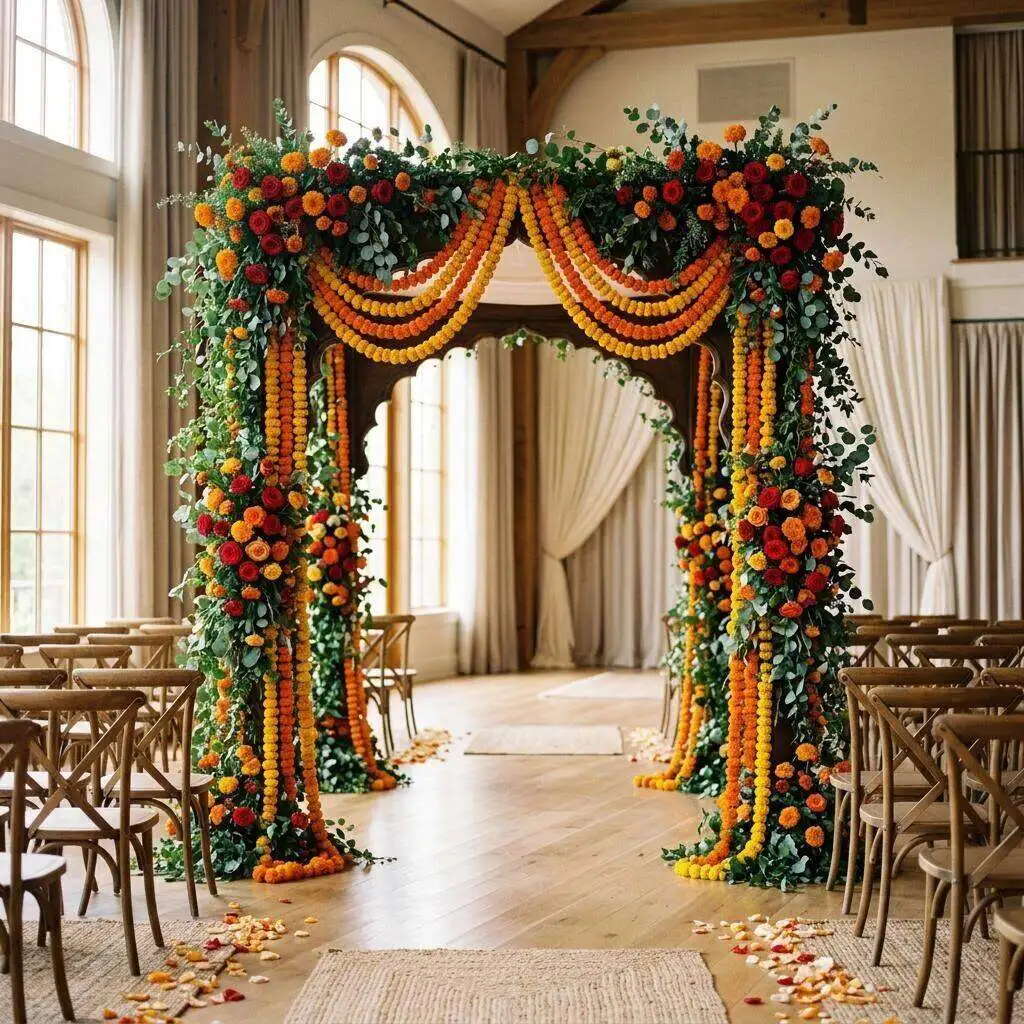
Indian Wedding
A planning overview for Indian wedding flowers across many regions and faiths — garlands, mandap-style structures, and multi-event floral timelines.
From the Flower Knowledge Center
Plan the whole celebration
Step-by-step planning help for this occasion — timelines, ideas, and checklists.
Written by the Burton Floral Design editorial team, presented by Bentley Florist. Published July 22, 2026 · Last updated July 22, 2026.
© Burton Floral Design, presented by Bentley Florist. All rights reserved. This guide may be shared in its original, unmodified form with attribution and a working link to BurtonFloralDesign.com. Content may not be republished, resold, altered, or represented as another organization's work without written permission.