How do I choose a wedding flower color palette?
The Short Answer
Start with two or three anchor colors pulled from your venue, season, and dress, then layer in a supporting neutral to keep things cohesive. Our designers at Bentley Florist usually build outward from one hero bloom so every arrangement feels connected rather than matchy.
Ready to order? Explore fresh, professionally designed arrangements available for local delivery through Bentley Florist.
Where to start when you feel overwhelmed
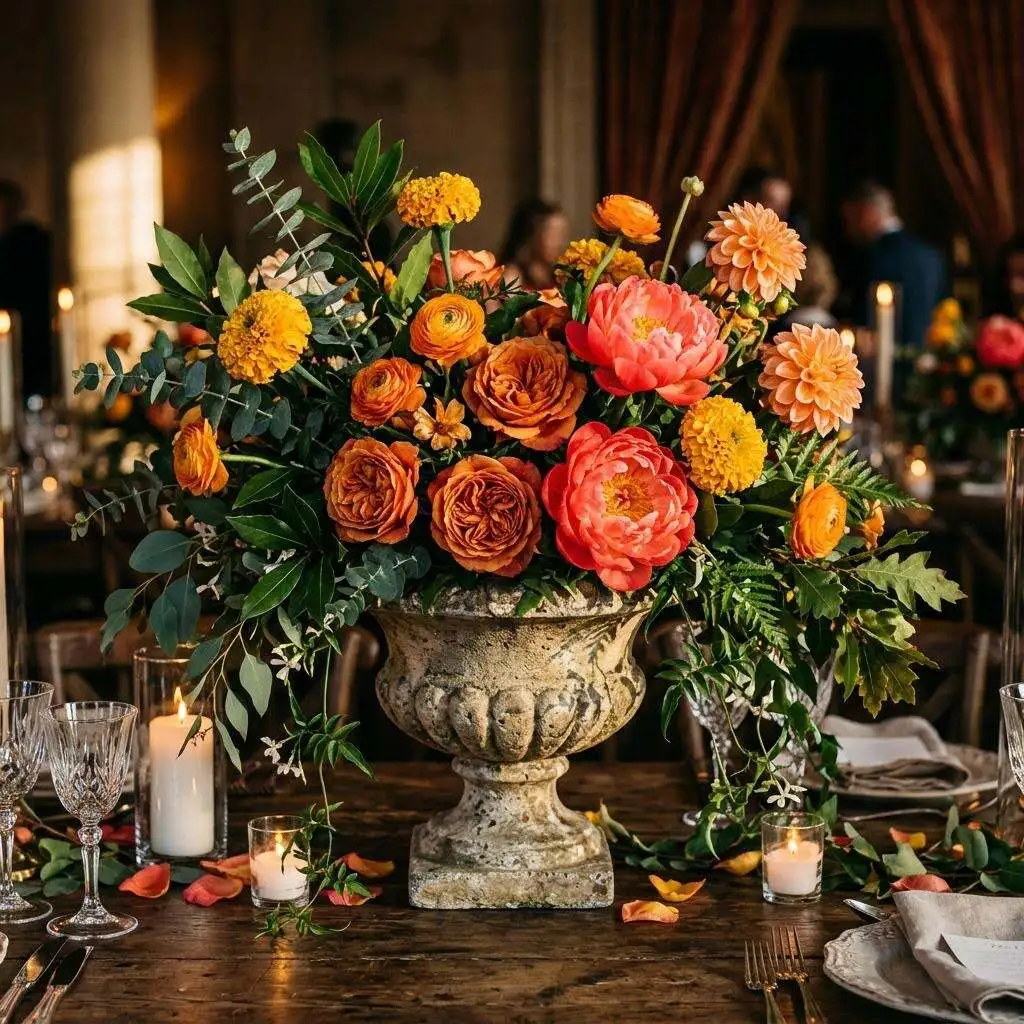
The fastest way to settle a palette is to choose one image you love — a swatch, a save-the-date, even a favorite scarf — and pull two or three colors from it. Most weddings look best with a dominant color, a secondary shade, and a neutral that ties everything together. For a mid-Michigan wedding, we often look out the window first: a June garden ceremony can carry soft blush and cream beautifully, while an October reception at a Genesee County venue welcomes deeper rust and burgundy. Deciding your dominant color early makes every later choice easier, from linens to bridesmaid dresses.
Balancing bold and neutral tones
A common mistake is choosing three equally saturated colors, which can fight for attention in photos. Instead, let one color lead and use the others as accents. Neutrals — ivory, sage, dusty greens, warm taupe — act like the breathing room between bold notes and make bright blooms read as intentional rather than busy. If you love a vivid color like coral or cobalt, ground it with plenty of greenery and white so it feels elegant. Our designers frequently suggest a roughly 60-30-10 split: sixty percent neutral or greenery, thirty percent your main color, ten percent your accent.
Letting the season lead your colors
Michigan's seasons give you a natural head start. Spring supports soft pastels and fresh green; summer handles saturated brights and clean whites; fall rewards terracotta, marigold, plum, and copper; winter looks stunning in white, silver, deep evergreen, and jewel tones. Working with the season also stretches your budget, because in-season blooms cost less and arrive in better condition. If your dream color is out of season — think true peony pink in November — we can suggest close matches like garden roses or ranunculus that carry the same feeling without the premium price or fragile shipping.
Testing your palette before you commit
Before locking anything in, gather physical samples. Order a dress swatch, a linen sample, and a printed inspiration photo, then look at them together in daylight and in warm indoor light, since colors shift dramatically between the two. Snap a photo on your phone, because that is how most people will see your flowers online afterward. Bring these samples to your consultation so we can match real flower varieties rather than screen colors, which are notoriously unreliable. A palette that survives this simple daylight test is one you will still love in your album years later.
Planning Tips From Our Designers
- Choose one dominant color and let the rest support it.
- Aim for roughly 60 percent neutral or greenery, 30 percent main color, 10 percent accent.
- View swatches in both daylight and warm indoor light before deciding.
- Pick colors that align with the season to save money and improve freshness.
- Bring physical samples, not just screen images, to your consultation.
Planning your wedding flowers?
Sit down with a Bentley Florist designer — we will walk through your vision, venue, season, and budget together. Consultations are always free.
Request A Wedding Floral ConsultationPrefer to order flowers now? Shop the Bentley Florist collection — same-day delivery across Burton and Flint.
Keep Exploring