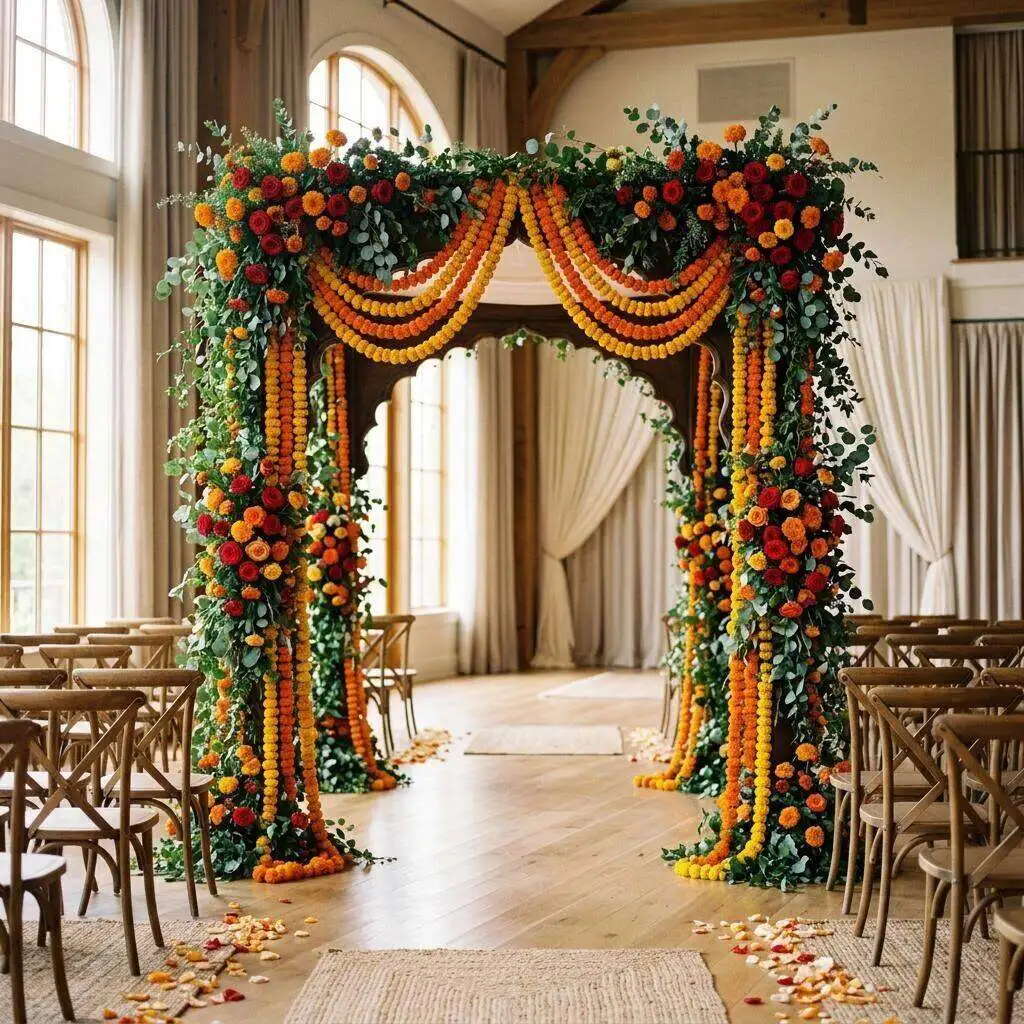
An Indian wedding is rarely a single afternoon. For many families it unfolds across several days and several gatherings, each with its own mood, its own guests, and its own reason for flowers. India is vast, and the families who plan weddings here in Genesee County may trace their roots to very different regions and may be Hindu, Sikh, Muslim, Christian, or Jain, so the shape of a celebration can look quite different from one household to the next.
Because of that, the way flowers appear in a wedding can vary a great deal from family to family, region to region, faith to faith, and even between generations of the same family. A design that feels essential to one couple may be unfamiliar to their friends, and both can be exactly right. Our starting point is not a template. It is a conversation.
This guide is written for planning, not for teaching anyone about their own heritage. It gathers the practical questions we ask, the floral moments that tend to come up across a multi-day celebration, and the Michigan seasonal notes that shape what looks its best on your dates. Bentley Florist, family-owned in Burton, Michigan since 1963, is glad to listen first and design second.
Overview
About This Celebration
For many families the wedding weekend moves through distinct moments: a mehndi gathering where henna is applied, a lively sangeet built around music and dancing, the ceremony itself, and a reception. Not every family holds all of these, and the order and names can differ, so we ask rather than assume. Each event tends to call for its own floral character, from playful and saturated at a mehndi to more composed at the ceremony.
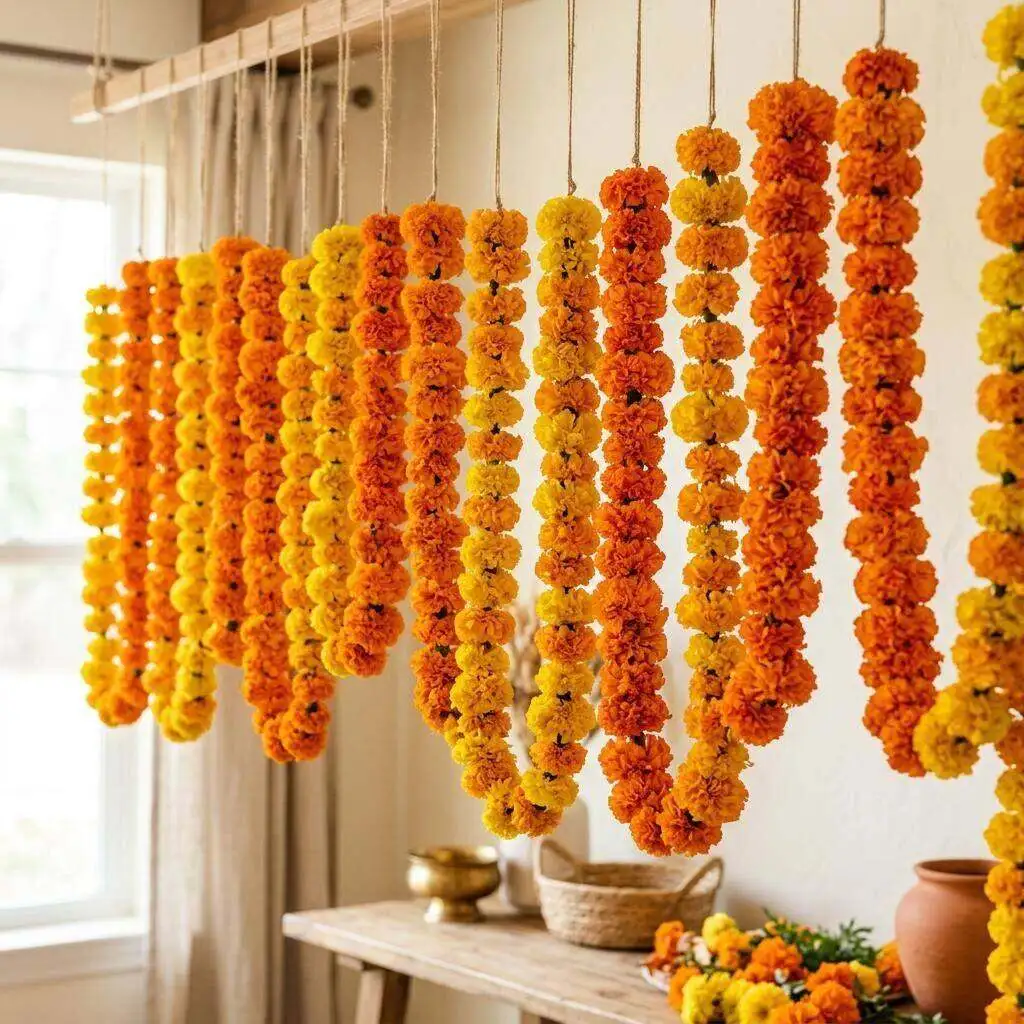
A garland exchange, sometimes called jaimala or varmala, is part of many Hindu ceremonies, though whether it appears, how the garlands are made, and what they include depend entirely on the couple and their family. When it is part of your day, the garlands become a photographed, handled, worn object rather than a static arrangement, so we build them to be sturdy, comfortable, and beautiful up close.
Across the weekend, flowers do more than decorate. They mark thresholds, frame the couple, and give guests a sense of arriving somewhere special. Our aim is to help you decide where that impact matters most for your family and to keep each event feeling connected without repeating itself.
Our starting point
Begin With the Family
Before we suggest a single stem, these are the questions we ask — because your family is the authority on your traditions.
- 01Which events are you planning, and on which days, so we can map flowers to each gathering rather than treating the weekend as one order?
- 02Are there ceremony elements that carry meaning for your family, and would you like flowers to support them quietly or more prominently?
- 03Does a garland exchange feature in your ceremony, and if so, who wears or presents the garlands and how would you like them to look?
- 04Are there flowers, colors, or fragrances your elders love, and are there any your family prefers to avoid?
- 05Who in the family should we coordinate with on the day, and who has the final say on design decisions?
- 06Would you like us to speak with your officiant, priest, or venue directly about placement and any guidelines?
Floral opportunities
Where Flowers Can Live
Mehndi gathering
Bright, informal florals for seating and low tables suit a relaxed daytime or evening henna celebration for many families.
Sangeet stage and dance floor
A decorated backdrop or stage where the couple and family sit and perform gives photos a focal point during music and dancing.
Ceremony structure
Many couples want a defined ceremony frame, whether an arch, canopy, or draped structure; we confirm dimensions and safety with the venue.
Garlands for the exchange
When a jaimala or varmala exchange is part of your ceremony, we craft wearable garlands to be comfortable and camera-ready.
Aisle and guest seating
Petals, markers, or clustered stems guide the entrance and warm the seating area without crowding movement.
Entrance and welcome table
A greeting arrangement, a sign-in table, or a doorway detail helps guests feel welcomed as they arrive at each event.
Reception centerpieces
Table florals set the tone for dining and dancing; heights can vary to keep sightlines open across long tables.
Head table or couple's seating
A distinct treatment behind the couple at the reception draws the eye and anchors toasts and photographs.
Personal flowers
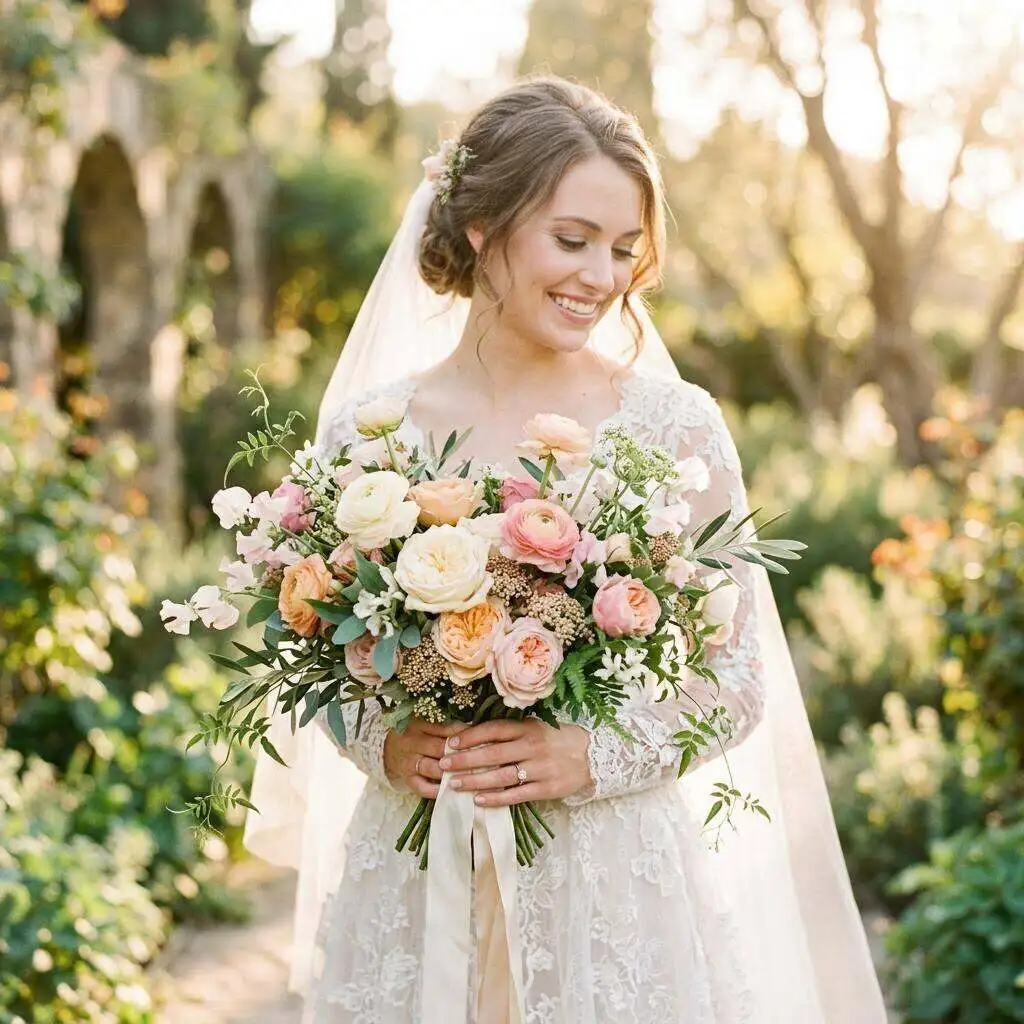
Bouquets, hair flowers, wrist or hand pieces, and boutonnieres can tie the wedding party together across events.
Palette
Color & Design Considerations
Color choices for Indian weddings are as varied as the families who plan them. Some couples lean into saturated, celebratory palettes; others prefer softer or more monochromatic looks; many mix both across different events. Rather than assign meaning to any color, we ask what draws you and what your families respond to, then build a palette that carries through the weekend.
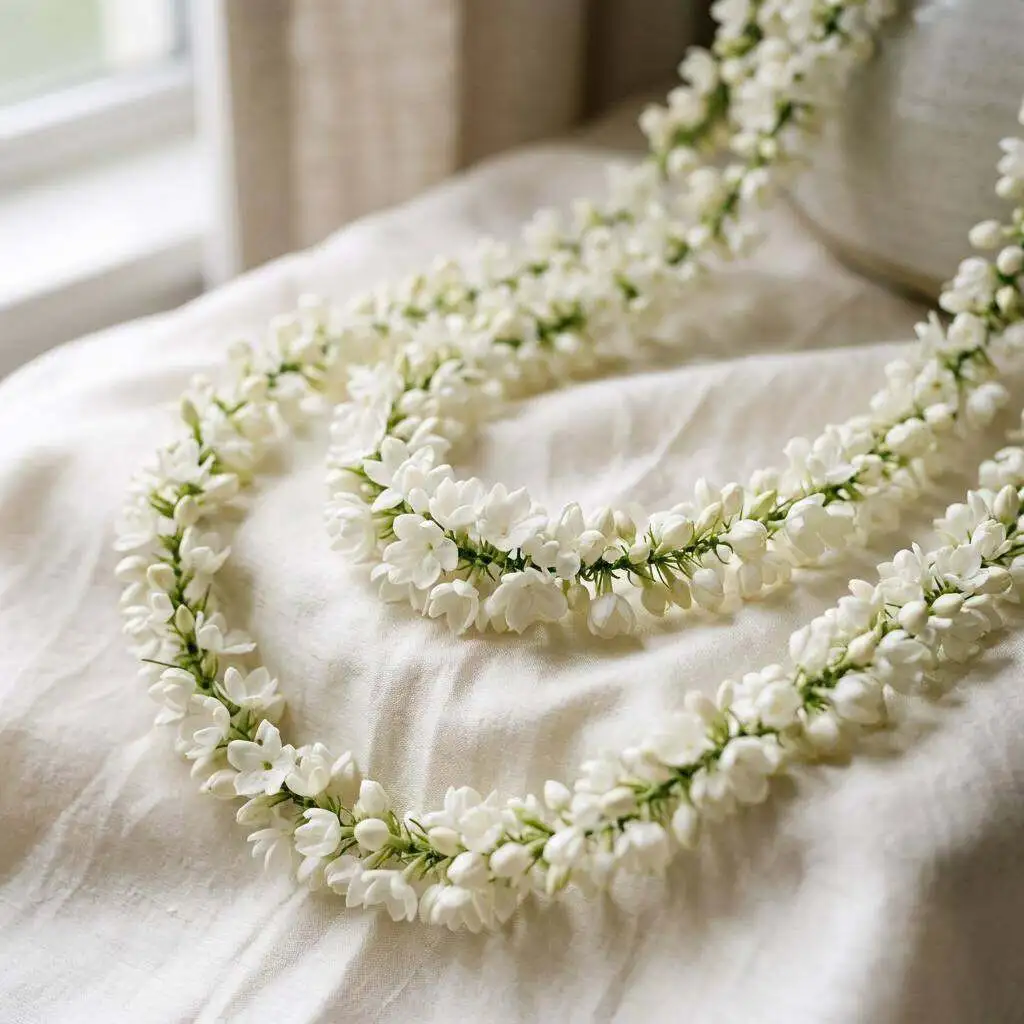
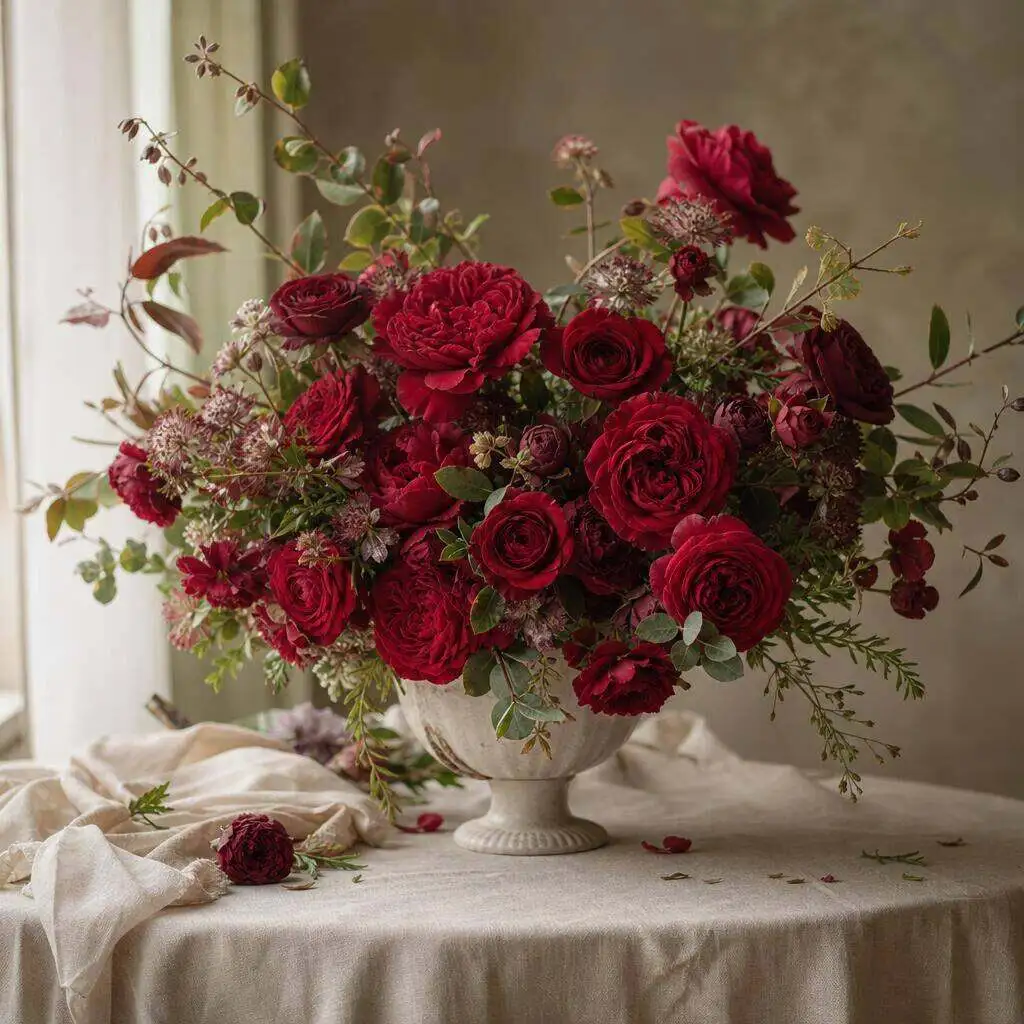
Marigolds, roses, and jasmine appear often in many families' celebrations and photograph beautifully, but they are options, not obligations. We are just as happy to design with orchids, dahlias, chrysanthemums, or whatever suits your vision and the season. If certain blooms hold sentimental weight for your family, tell us and we will build around them.
Because a weekend spans several events, we think about a color story that can shift in energy while still feeling like one wedding. A vivid mehndi and a more refined ceremony can share a common thread, whether that is a repeated flower, a consistent green, or a signature accent that reappears.
Texture and scale matter as much as color. Garlands read differently than clustered arrangements, and a large ceremony structure needs blooms that hold their shape under lights and handling. We balance delicate and sturdy materials so each piece looks intentional up close and from across the room.
Bring these questions to your family conversation
- Are there colors your family especially loves for a wedding, or any you would rather we set aside?
- Would you like each event to have its own palette, or one look that carries across the weekend?
- Do marigolds, roses, or jasmine feel right to you, or would you prefer a different direction entirely?
- Are there flowers with sentimental meaning for your family that you would like us to include?
- How saturated or how soft would you like the overall look to feel?
- Should the ceremony and reception match closely, or contrast on purpose?
- Are there fragrances you love or would prefer to keep light in enclosed spaces?
- Do you have inspiration images that capture the feeling you are after?
Planning around the calendar
Michigan Seasons & Your Venue
Spring
Michigan spring brings tulips, ranunculus, and early garden roses; peonies arrive late in the season and are a lush option if your dates align.
Summer
Summer offers the widest local variety, including dahlias and garden roses, but heat and humidity ask for hardy choices and shaded staging for anything held outdoors.
Fall
Autumn is strong for dahlias, chrysanthemums, and marigolds, with deeper tones readily available; early frost can shorten the local growing window.
Winter
Winter relies more on greenhouse and imported blooms; roses, orchids, and amaryllis are dependable, and we plan warm-to-cold transport carefully in Michigan cold.
Many Indian celebrations move between spaces across a weekend, sometimes indoors, sometimes outdoors, sometimes both in one day. We ask early where each event happens so we can plan for the realities of each room and the Michigan weather on your dates.
Outdoor events in summer need protection from heat and sun; we favor resilient blooms, keep flowers cool until the last moment, and stage anything delicate in shade. For cooler or unpredictable seasons, we plan for wind, quick setup, and backup indoor positioning where the venue allows.
Large structures and stages raise practical questions about ceiling height, anchoring, power for lights, and load-in timing. We confirm these details with the venue and coordinators so installations are safe, stable, and ready before guests arrive.
Making choices with impact
Where Flowers Matter Most
With several events to dress, the most useful first step is deciding where flowers carry the most impact for your family. For some that is the ceremony structure and the garlands; for others it is the reception the couple and guests spend the most time in. Naming your priorities lets us concentrate resources where they will be felt.
Repurposing stretches every design. Blooms staged at a ceremony can often be moved to the reception, and a stage backdrop from the sangeet may be reworked for another event with fresh accents. We plan these transitions in advance so the movement is smooth and nothing looks tired.
Scale is a lever you control. A few generous focal moments often read as more intentional than many small ones spread thin, and choosing where to go large versus simple keeps the weekend cohesive. We will show you where a bigger gesture pays off and where restraint looks better.
Because events differ in energy, it is fine for their floral weight to differ too. A relaxed mehndi may want less than a formal reception, and letting each gathering be what it is keeps the whole weekend balanced.
Your family's traditions and preferences deserve to be heard. Share the details that matter to you, and Bentley Florist will help explore floral ideas that respectfully support your celebration.
Conversation guides
Questions Worth Asking
For your family
- Which events will you hold, and which matter most to you visually?
- Are there ceremony elements you would like flowers to support, and how prominently?
- Will a garland exchange be part of the ceremony, and who wears or presents the garlands?
- Are there flowers or colors your elders particularly love?
- Are there blooms, colors, or scents your family prefers to avoid?
- Who should we coordinate with on the wedding weekend?
- Would you like us to speak with your officiant or priest about placement?
- Do you want each event to feel distinct, or share a unified look?
- Are there personal flowers you want for family members beyond the couple?
- How would you like flowers moved or reused between events?
- Are there photographs or moments you especially want flowers to frame?
- Is there anything about your celebration you would like us to understand before we suggest anything?
For your venue or house of worship
- What are the ceiling heights and dimensions in each event space?
- Are there restrictions on anchoring, hanging, or freestanding structures?
- What are the load-in and setup windows for each event?
- Is there refrigerated or cool holding space for flowers before setup?
- Are open flames, candles, or a sacred fire permitted, and what clearance do you ask for?
- Where can deliveries arrive, and is there elevator or dock access?
- Is power available for lighting on floral structures?
- Are there rules about petals, water, or installations on floors and walls?
- Who is the on-site contact during setup and the events?
- How quickly should everything be removed after each gathering?
Learn from experience
Planning Mistakes to Avoid
Treating the weekend as one order
Planning all events as a single design misses the different energy each gathering wants; we map flowers event by event so nothing feels repetitive or thin.
Assuming which customs apply
Regions and faiths differ widely, so we ask which elements are part of your celebration rather than guessing from a generic idea of an Indian wedding.
Under-building the garlands
Worn and handled garlands need more structure than a static arrangement; skimping on their construction shows quickly in photos and wear.
Skipping the venue conversation
Not confirming heights, anchoring, and setup windows leads to last-minute surprises with large structures and stages.
Forgetting the transitions
Without a plan to move or refresh flowers between events, pieces can look wilted or out of place by the next gathering.
Keep track
Your Planning Checklist
Early planning
Design decisions
Venue and logistics
FAQ
Common Questions
Related resources
Keep Exploring
Hindu Wedding
Floral inspiration for Hindu wedding ceremonies — garland exchanges, mandap decoration ideas, and the family and priest questions to ask before designing.
South Asian Wedding
A broad planning guide for South Asian weddings — coordinating flowers across several events, blending family expectations, and budgeting attention wisely.
Pakistani Wedding & Mehndi
Festive floral planning for Pakistani weddings and mehndi nights — stage designs, fresh flower jewelry conversations, and multi-day event coordination.
Sikh Wedding
Respectful floral planning for Sikh weddings — gurdwara etiquette questions, milni and reception flowers, and garland conversations to have early.
From the Flower Knowledge Center
Plan the whole celebration
Step-by-step planning help for this occasion — timelines, ideas, and checklists.
Written by the Burton Floral Design editorial team, presented by Bentley Florist. Published July 22, 2026 · Last updated July 22, 2026.
© Burton Floral Design, presented by Bentley Florist. All rights reserved. This guide may be shared in its original, unmodified form with attribution and a working link to BurtonFloralDesign.com. Content may not be republished, resold, altered, or represented as another organization's work without written permission.