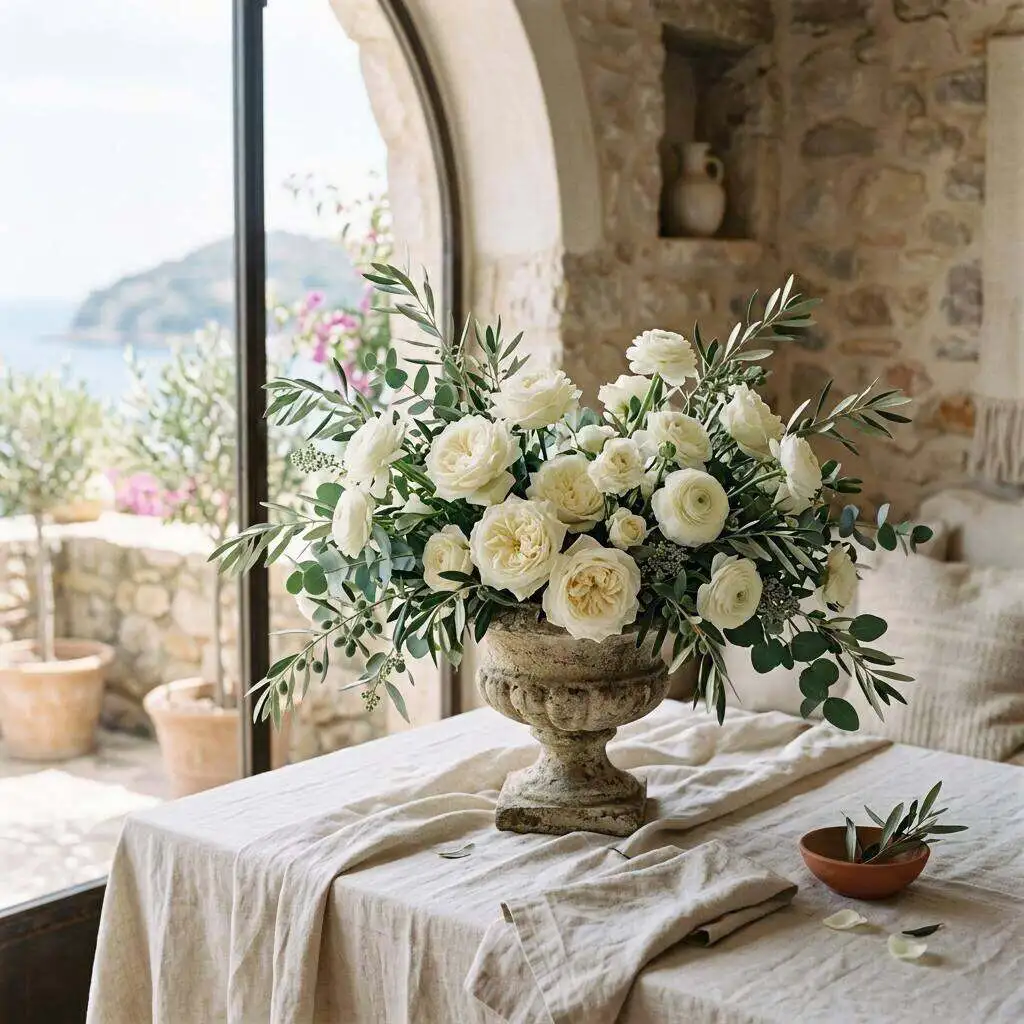
Arab and Middle Eastern is a wide umbrella, and no single wedding looks like another beneath it. Arab communities span many faiths, including Christian, Muslim, Druze, and others, and many countries, from Lebanon and Syria to Palestine, Egypt, Iraq, Yemen, and beyond. The way a family celebrates can vary from household to household, shaped by faith, region, generation, and personal taste, so we treat this guide as a starting point for conversation rather than a script to follow.
At Bentley Florist, a family-owned shop in Burton, Michigan since 1963, we design flowers by listening first. We do not assume that what one family keeps as tradition is what yours keeps, and we never treat a heritage as a theme to decorate around. Instead, we ask questions, take notes, and let the family teach us what matters, then translate those details into arrangements that support the day.
This guide gathers practical florist thinking for entrances, stages, family tables, and reception rooms, along with the questions worth asking your own relatives before any design begins. Where a custom appears here, read it as something some families observe rather than something universal, and tell us which parts belong to your celebration.
Overview
About This Celebration
Weddings across Arab and Middle Eastern communities often center on gathering, generosity, and a sense of arrival, though how that unfolds differs a great deal. For some families the reception is the heart of the day, with a stage or seating area where the couple is celebrated; for others a ceremony in a church or the marriage rites observed in a family or faith setting carry the weight, with the party that follows shaped around them.
A grand musical entrance is part of some celebrations and not others. When it is planned, flowers may frame the path or the stage the couple arrives at; when it is not, the same energy might live in a beautifully dressed entrance or a generous head table. We hedge on purpose here, because the shape of the evening belongs to the family, not to a general assumption.
Our role is to notice where people will look, linger, and take photographs, and to place flowers so they earn their spot. We would rather understand your specific plans, then design toward them, than impose a fixed idea of what an Arab or Middle Eastern wedding should be.
Our starting point
Begin With the Family
Before we suggest a single stem, these are the questions we ask — because your family is the authority on your traditions.
- 01Which parts of the celebration matter most to your family, and which spaces will hold the greatest attention, such as an entrance, a stage, or the head table?
- 02Are there faith or family customs we should understand so flowers support them respectfully rather than getting in the way?
- 03Is a grand musical entrance, sometimes called a zaffa, part of your plans, and if so, should the florals frame that moment or stay simple around it?
- 04Are there colors your family loves, and are there any colors or flowers you would prefer we avoid?
- 05Will the celebration span more than one event or day, and would you like a look that carries a thread between them?
- 06Who in the family should we coordinate with on timing, delivery, and setup, so decisions reach us clearly?
Floral opportunities
Where Flowers Can Live
Entrance and welcome
Arrangements at the doors or welcome table set the tone as guests arrive and often photograph well before the room fills.
Zaffa or grand entrance path
For families planning a musical procession, florals can line or frame the path and greet the couple as they arrive, if that suits the venue.
Couple's stage or seating area
A focal design behind or around where the couple is seated draws the eye and anchors many of the evening's photographs.
Head table and family tables
Lush low or elevated centerpieces mark the tables that carry the most meaning without crowding conversation or sightlines.
Guest table centerpieces
A repeatable centerpiece across the room ties the space together and scales up or down with the guest count.
Bridal bouquet and wedding party
Bouquets, boutonnieres, and corsages coordinate the wedding party and the closest family members.
Ceremony or rites space
When a church, mosque, or family setting hosts the rites, arrangements should respect that space and its rules on placement.
Cake and dessert display
A few blooms echoing the palette dress the cake table and any sweets display that guests gather around.
Photo or backdrop moment
A floral backdrop gives guests a place to gather for pictures and extends the design beyond the head table.
Palette
Color & Design Considerations
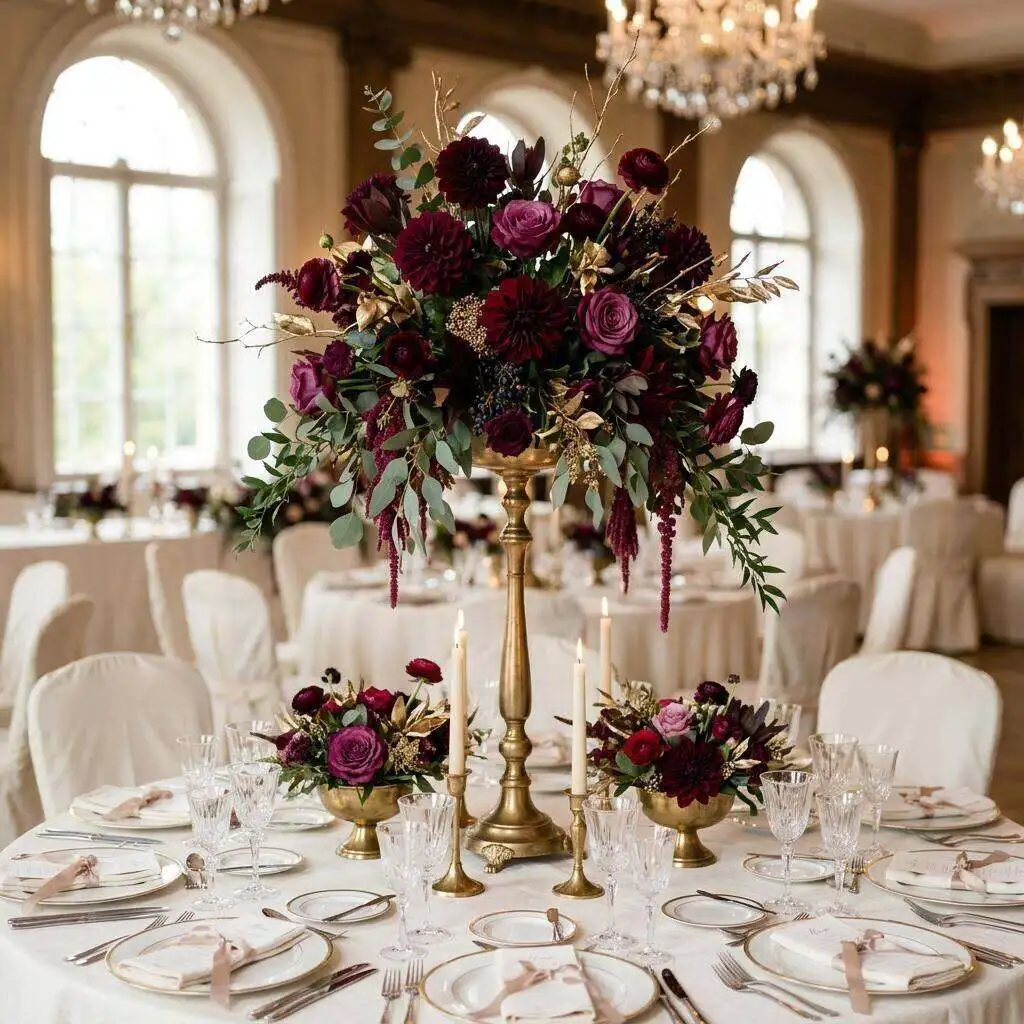
We start palette conversations with the family rather than with any assumption about what colors an Arab or Middle Eastern wedding calls for. Some families lean toward crisp whites and greenery, some toward warm gold accents, some toward jewel tones or soft blush; there is no single right answer, and we listen for what feels like the family's own.
Scale is part of the design language here. When a stage or entrance is the focus, a generous, layered look can read beautifully in a large room, while a more restrained palette lets architecture and lighting do some of the work. We talk through the size of the venue and the mood you want before committing to a direction.
Texture and repetition help a design hold together across a big space. Mixing focal blooms with supporting flowers and greenery keeps arrangements from looking flat under event lighting, and repeating a few shapes across the room creates rhythm without every piece being identical.
If any element of your celebration carries specific meaning for your family, tell us, and we will support it with flowers rather than trying to represent it ourselves. Flowers set the mood; the meaning belongs to your family.
Bring these questions to your family conversation
- Are there colors that feel central to how your family imagines the day?
- Do gold or metallic accents appeal to you, or would you prefer an all-natural palette?
- Are there flowers or colors you would rather we leave out entirely?
- Should the ceremony and reception share one palette, or feel distinct from each other?
- Do you want a bold, saturated look, or something soft and light?
- Are there fabrics, invitations, or attire we should coordinate the flowers with?
- How important is fragrance to you in the bouquets and table flowers?
Planning around the calendar
Michigan Seasons & Your Venue
Spring
Michigan spring brings tulips, ranunculus, and early peonies as gardens wake up. Cool mornings help delicate blooms hold, and locally grown stems become available as the season warms.
Summer
Peak wedding season offers garden roses, dahlias, and lush greenery, but Michigan heat and humidity can stress soft petals. We plan hydration, shade, and timing for outdoor moments.
Fall
Autumn brings dahlias, deeper roses, and rich foliage that suit warm palettes. Early frost can shorten local growing, so we confirm availability as the season turns.
Winter
Winter leans on greenhouse roses, ranunculus, amaryllis, and evergreens. Cold snaps mean we protect flowers in transit and time delivery close to setup to keep them crisp.
Many Arab and Middle Eastern weddings in our area are held in banquet halls and reception venues, which gives us controlled lighting and climate for larger installations. When the celebration includes an outdoor ceremony or a garden moment, we plan differently, choosing sturdier blooms and building in hydration for Michigan's summer heat.
For any outdoor element, we watch the forecast closely and prepare a fallback so a sudden rain or a heat spike does not undo the design. Flowers that look effortless still need shade, water, and thoughtful timing, and we set up as close to the event as a venue allows to keep everything fresh.
In winter, the short window between a cold vehicle and a warm room matters, so we coordinate delivery and setup with the venue to protect delicate stems. Telling us early whether your spaces are indoor, outdoor, or a mix lets us design for the real conditions rather than an ideal one.
Making choices with impact
Where Flowers Matter Most
We help families put flowers where they carry the most impact, which usually means the spaces guests photograph and remember most. For many celebrations that is the entrance and the couple's stage or seating area, where a strong focal design does more for the room than the same flowers spread thin across every corner.
Repurposing is one of the most practical ways to stretch a design. Arrangements from a ceremony or rites space can often move to the reception, and larger pieces can be positioned so they read from multiple angles. We plan these moves in advance so nothing feels rushed on the day.
Scale choices shape impact as much as flower count. A few large, considered pieces can anchor a big room more effectively than many small ones, while a repeated centerpiece creates fullness across guest tables. We talk through where lushness matters to you and where a lighter touch will still look intentional.
Because the shape of Arab and Middle Eastern celebrations varies so widely, we build the plan around your priorities rather than a template, focusing effort on the moments your family cares about most.
Your family's traditions and preferences deserve to be heard. Share the details that matter to you, and Bentley Florist will help explore floral ideas that respectfully support your celebration.
Conversation guides
Questions Worth Asking
For your family
- Which events make up your celebration, and which one is the main gathering?
- Is a zaffa or grand entrance planned, and how would you like flowers to relate to it?
- Are there faith or family customs we should understand before we design?
- Who is hosting, and who should approve the floral decisions?
- Which spaces should feel the most dressed, and which can stay simple?
- Are there colors or flowers your family loves, and any to avoid?
- How large is the guest count, and how many tables should we plan for?
- Would you like a look that carries between events, or a distinct feel for each?
- Are there heirloom or personal items you would like flowers to accompany respectfully?
- Do older relatives have preferences we should honor in the design?
- How do you picture the couple's stage or seating area?
- Is fragrance something you want emphasized or kept subtle?
For your venue or house of worship
- What are the delivery and setup windows, and how early can we access each space?
- Are there restrictions on candles, hanging installations, or anchoring large pieces?
- Where are the loading access points and the nearest doors to the main rooms?
- Is there a climate-controlled area to hold flowers before setup?
- For a zaffa or grand entrance, what is the path, and can florals be placed along it?
- If a church, mosque, or family setting hosts the rites, what are its rules on flower placement?
- Who is our on-site contact on the wedding day?
- Can ceremony or rites arrangements be moved to the reception, and who handles that?
- What is the takedown timing, and who is responsible for removing pieces?
- Are there sightlines, screens, or fixtures we should design around?
Learn from experience
Planning Mistakes to Avoid
Assuming one tradition fits every family
Treating Arab and Middle Eastern weddings as a single style leads to designs that miss the mark. We ask each family what they keep rather than guessing.
Planning a zaffa framing without confirming it
Because a grand entrance is part of some celebrations and not others, we confirm whether it is planned before building florals around it.
Leaving venue rules unchecked
Halls and houses of worship have their own limits on candles, hanging pieces, and access. Learning them early prevents last-minute changes.
Spreading flowers too thin
Distributing the same flowers evenly everywhere can weaken the focal moments. We concentrate impact where guests look most.
Skipping the repurposing plan
Without a plan to move ceremony pieces to the reception, families lose easy impact. We map those moves ahead of time.
Underestimating Michigan weather
Outdoor moments in summer heat or winter cold need protection. Ignoring the forecast risks wilting or damage on the day.
Keep track
Your Planning Checklist
Early planning
Design decisions
Venue coordination
Final week
FAQ
Common Questions
Related resources
Keep Exploring
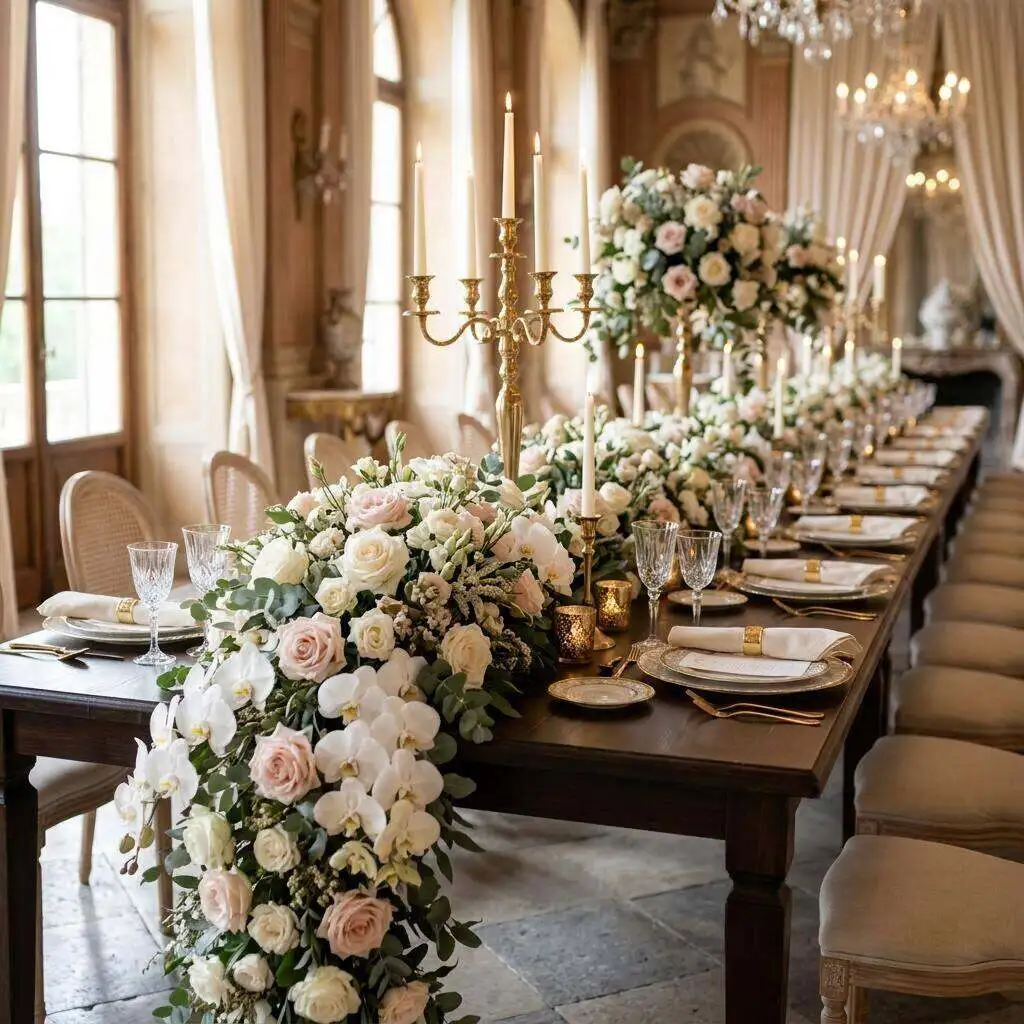
Lebanese Wedding
Floral inspiration for Lebanese weddings — lush reception designs, entrance moments, and planning questions that honor how your own family celebrates.
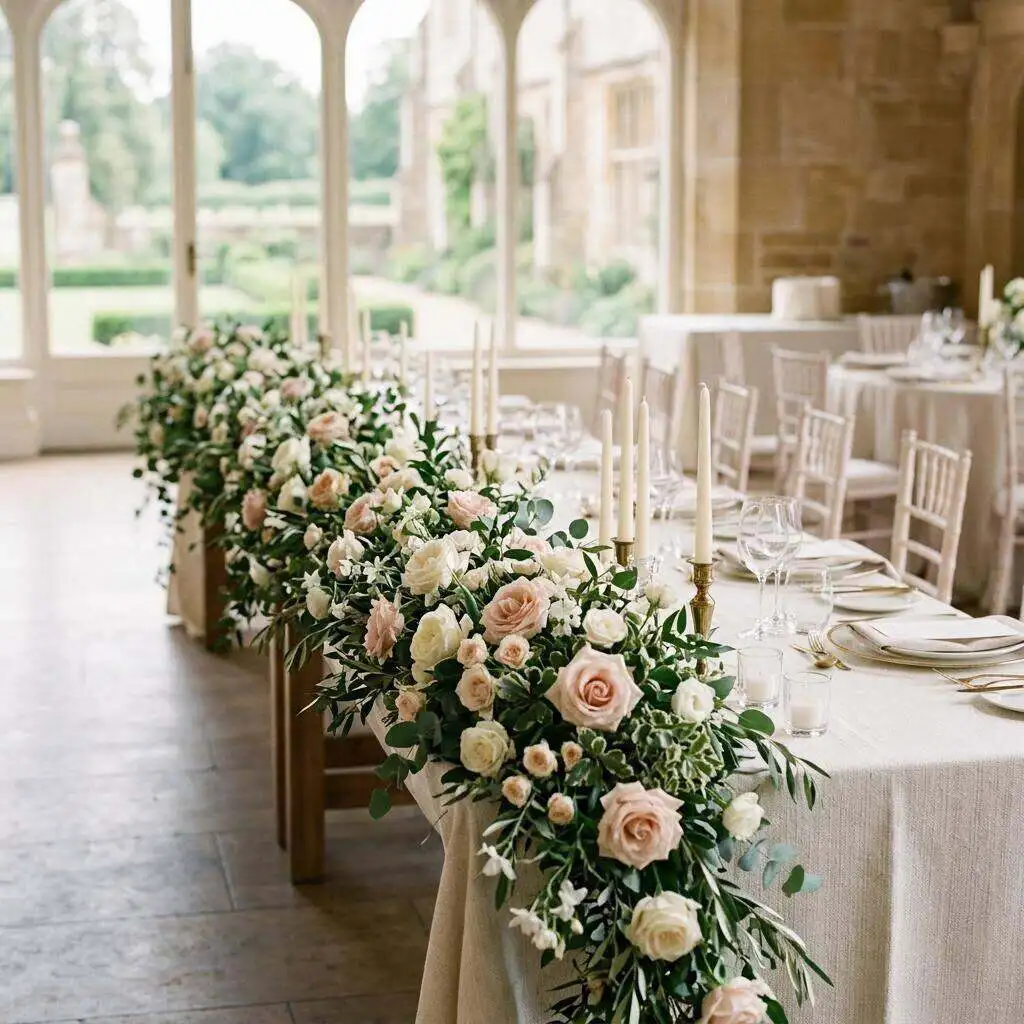
Egyptian Wedding
Floral inspiration for Egyptian weddings — grand entrances, kosha stage ideas, and thoughtful questions about the traditions your family holds dear.
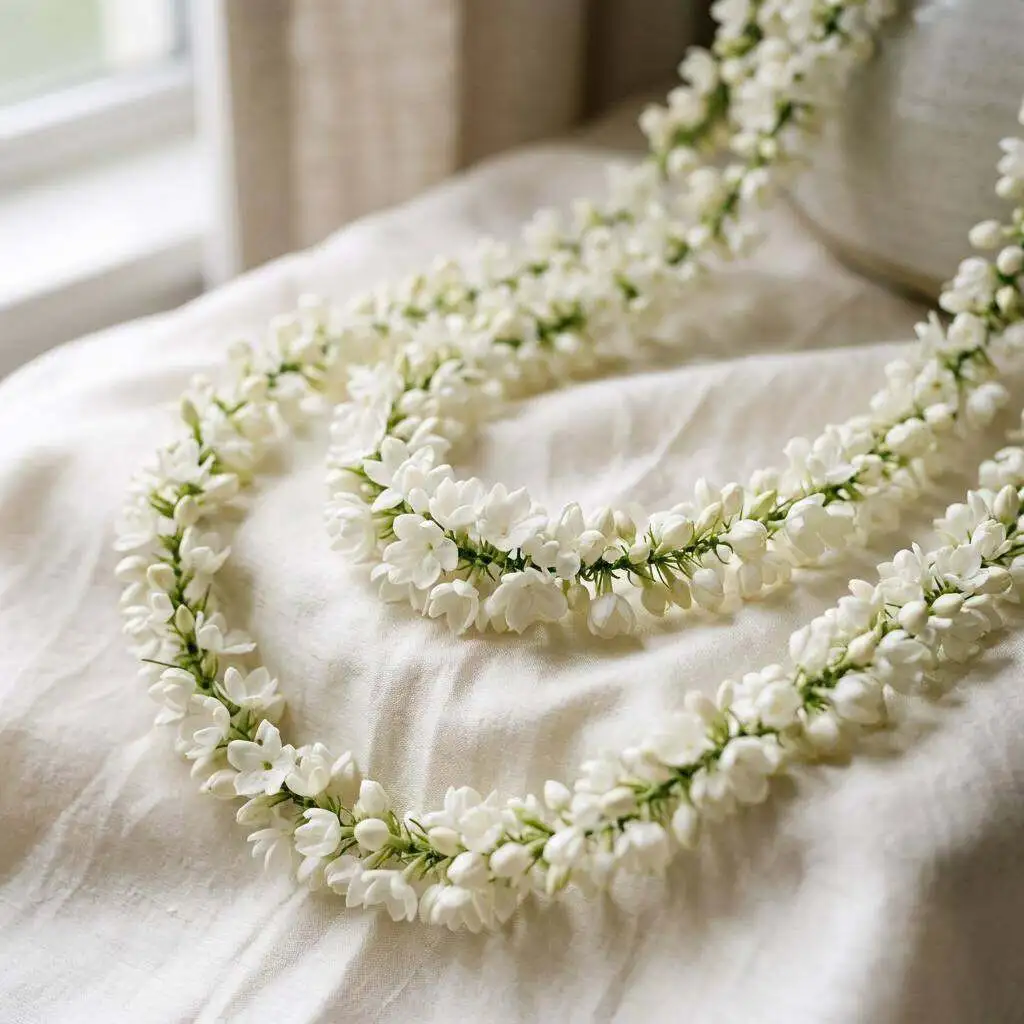
Henna Night
Festive, family-centered floral ideas for henna nights and pre-wedding parties, with planning prompts that respect how your family celebrates.
Muslim Wedding
A respectful overview of floral planning for Muslim weddings across many cultures — ceremony settings, receptions, and what to confirm with family first.
From the Flower Knowledge Center
Plan the whole celebration
Step-by-step planning help for this occasion — timelines, ideas, and checklists.
Written by the Burton Floral Design editorial team, presented by Bentley Florist. Published July 22, 2026 · Last updated July 22, 2026.
© Burton Floral Design, presented by Bentley Florist. All rights reserved. This guide may be shared in its original, unmodified form with attribution and a working link to BurtonFloralDesign.com. Content may not be republished, resold, altered, or represented as another organization's work without written permission.