How did the Victorians send secret messages with flowers?
The Short Answer
Victorians used floriography, a coded language where each flower and even the way it was presented carried a specific message. Sending a tussie-mussie, a small hand-tied bouquet, let people express feelings that strict etiquette otherwise forbade. Details like which hand received the flowers or whether they were upside down all changed the meaning.
Ready to order? Explore fresh, professionally designed arrangements available for local delivery through Bentley Florist.
Why flowers became a secret code
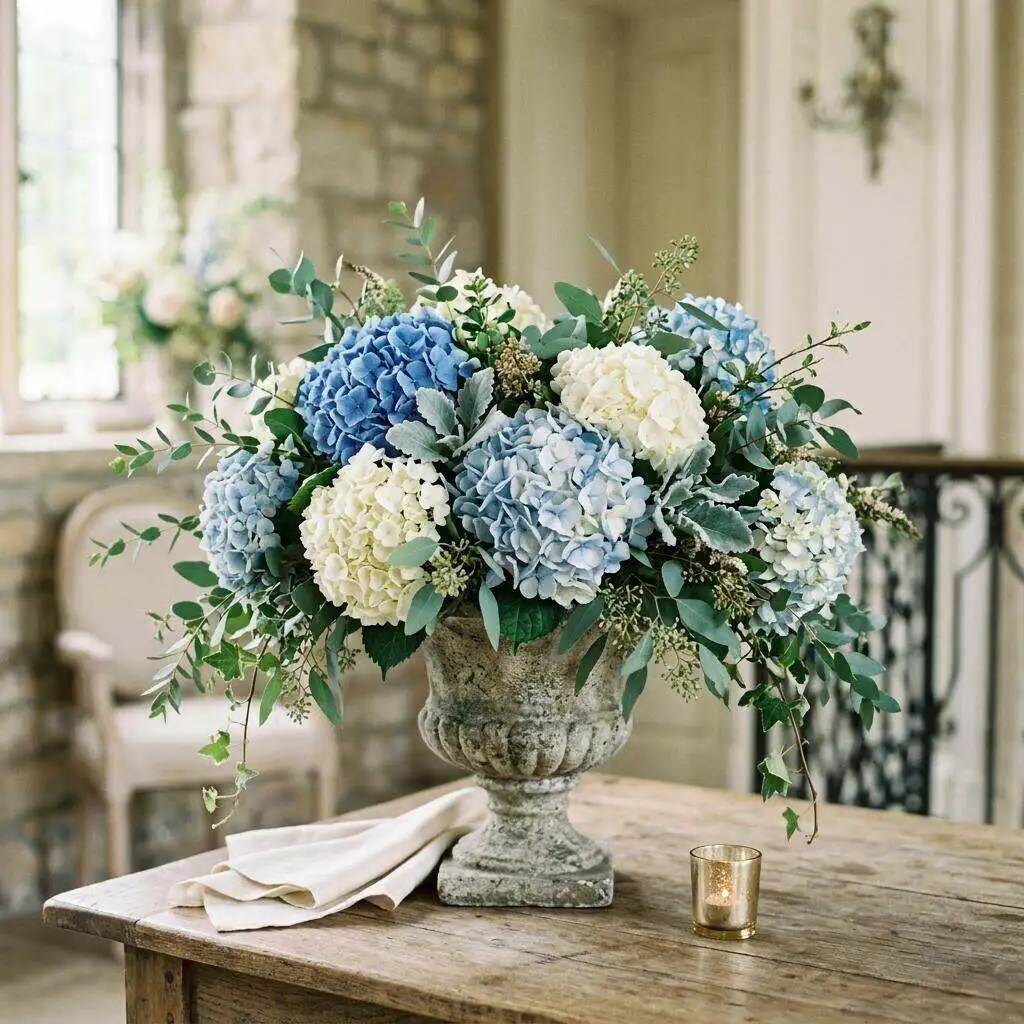
Victorian society ran on strict rules about what could and could not be said, especially between courting couples. Flowers offered a graceful loophole. A suitor could send a carefully chosen bouquet that expressed longing, hope, or even rejection without a single improper word. Dozens of flower dictionaries were published to help both sender and recipient decode the messages, and giving one of these little books was itself a popular gift. The practice turned an ordinary bouquet into a private conversation, which is part of why the tradition still fascinates people today.
Common Victorian flower meanings
Some of the most enduring meanings come straight from this era. Red roses meant passionate love, while yellow roses could signal jealousy or friendship depending on the source. Ivy represented fidelity, forget-me-nots meant true and faithful love, and a red tulip was a declaration. Less flattering messages existed too: yellow carnations expressed disdain, and a striped carnation meant refusal. Rosemary stood for remembrance, and pansies meant thoughts of you. Because meanings varied between the many published dictionaries, a thoughtful sender would sometimes note which reference they were using.
The hidden grammar of presentation
The Victorians layered extra meaning onto how flowers were handed over. A bouquet presented upright carried a positive message, while one handed over upside down reversed the sentiment. Offering flowers with the right hand meant yes, while the left hand meant no. Even how a recipient wore the flowers replied to the sender, since pinning them over the heart signaled love returned. This intricate grammar meant an entire courtship could unfold through gestures and blooms, all while maintaining perfect outward propriety.
Bringing floriography into a modern gift
You can revive this romantic tradition without memorizing a Victorian dictionary. Pick two or three flowers whose meanings tell a small story, arrange them in a compact hand-tied posy like a tussie-mussie, and tuck in a note translating the message. It makes an unforgettable anniversary or apology gift. Our designers love building these coded bouquets and can suggest historically accurate pairings so the meaning holds together beautifully.
Planning Tips From Our Designers
- Choose two or three flowers whose meanings tell a simple, clear story.
- Arrange them as a compact hand-tied posy for an authentic tussie-mussie look.
- Include a note translating the message so it is not lost.
- Avoid flowers with negative Victorian meanings unless that is the intent.
- Ask a designer for historically accurate pairings for anniversaries or apologies.
Still have a question?
Ask a real floral designer. We answer every question personally, usually within one business day.
Ask A Floral DesignerPrefer to order flowers now? Shop the Bentley Florist collection — same-day delivery across Burton and Flint.
Keep Exploring