What is the language of flowers and how does it work?
The Short Answer
The language of flowers, sometimes called floriography, is a tradition of assigning specific meanings to individual blooms so that a bouquet can carry a message. It reached its height in the Victorian era, when a carefully chosen arrangement could say things aloud conversation could not. Today it lives on as a gentle, thoughtful way to make a gift more personal.
Ready to order? Explore fresh, professionally designed arrangements available for local delivery through Bentley Florist.
Where the tradition comes from
The idea of flowers carrying meaning is ancient, appearing in Greek myth, Persian poetry, and folk custom across the world. It became a formal system in 18th and 19th century Europe, when travelers brought home tales of Turkish selam, a game of sending coded messages through objects. Victorians embraced it wholeheartedly, publishing little dictionaries that paired each flower with a sentiment. A suitor might send a bloom to hint at affection, and the recipient would reach for the same reference book to decode it. The charm was in the subtlety, since a single stem could speak volumes without a word being said out loud.
How meanings actually get assigned
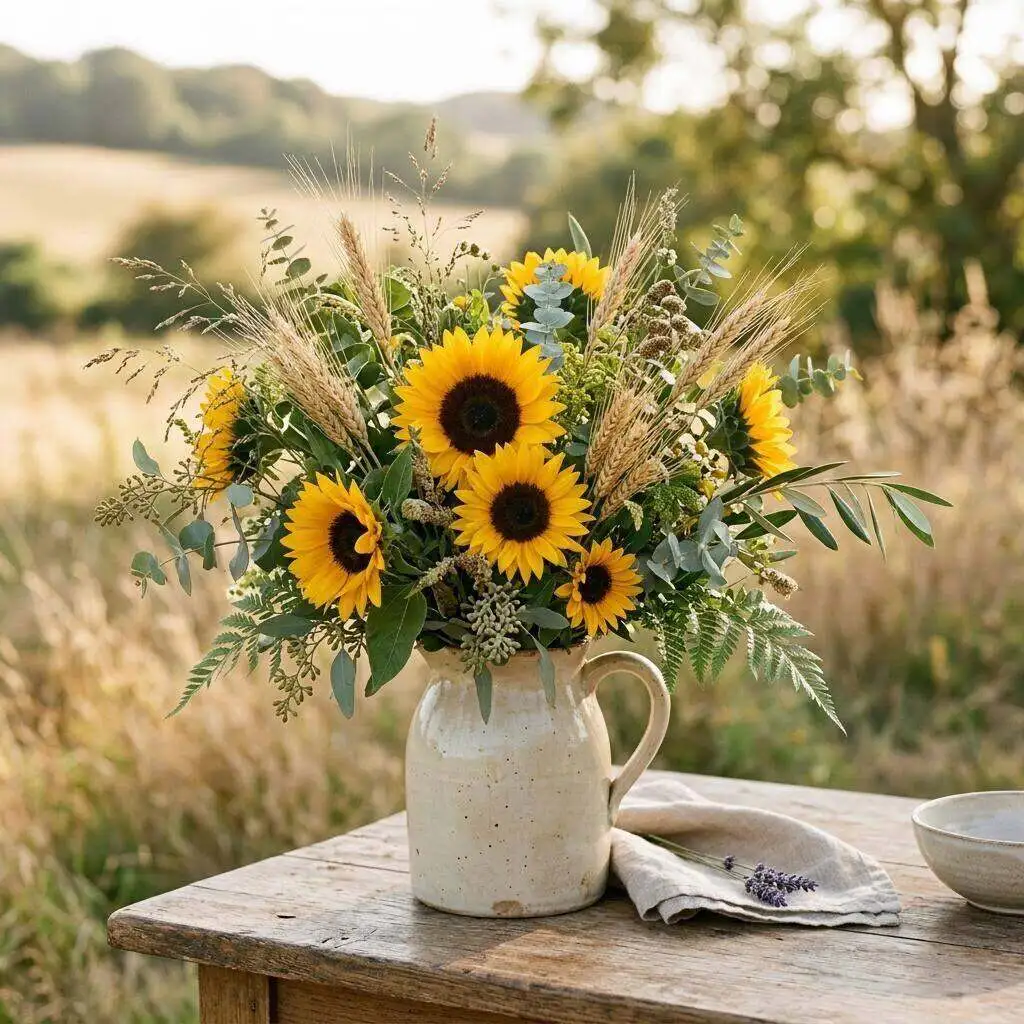
Flower meanings usually grow out of three roots: mythology, physical characteristics, and cultural history. Rosemary means remembrance because of its long association with memory and funerals. Sunflowers mean adoration because they turn to follow the sun. Red roses mean love partly because of Roman ties to Venus. Because these meanings developed in many places over many centuries, they are not always consistent, and one flower can carry several readings. That is part of the fun rather than a flaw. When our designers build a meaningful bouquet, we lean on the most widely recognized interpretations so the message reads clearly.
Using flower language today
You do not need a Victorian dictionary to send a thoughtful message. Pick a central flower whose meaning matches your intent, then surround it with supporting blooms that reinforce or soften the sentiment. A get well bouquet might center on cheerful yellow, while an apology might pair white tulips for forgiveness with purple hyacinth. If you want the gift to be understood, include a short note explaining your choices. At Bentley Florist our designers often suggest one anchor flower plus two complements, which keeps the meaning focused instead of muddled.
When to lean into it
Flower language shines for milestone and emotional moments: anniversaries, apologies, congratulations, sympathy, and new beginnings. It is less useful when someone simply wants a bright, happy arrangement, and forcing symbolism there can overcomplicate a joyful gift. Trust your instinct about whether the recipient will appreciate the layer of meaning. Some people treasure it, while others just want beautiful flowers. Either choice is valid, and a good designer will help you decide how far to take the symbolism.
Planning Tips From Our Designers
- Choose one anchor flower for the main message and keep supporting blooms simple.
- Include a short handwritten note so the meaning is not lost on the recipient.
- Remember that color changes meaning, so pick the shade as carefully as the flower.
- Widely known meanings communicate better than obscure ones.
- If in doubt, ask a designer to confirm the interpretation before you order.
Still have a question?
Ask a real floral designer. We answer every question personally, usually within one business day.
Ask A Floral DesignerPrefer to order flowers now? Shop the Bentley Florist collection — same-day delivery across Burton and Flint.
Keep Exploring