How do I compost funeral flowers responsibly?
The Short Answer
Cut flowers compost well once you remove any non-organic parts. Pull out wire, foam, plastic ties, and ribbon, then chop the stems and blooms and add them to a compost pile or yard-waste bin as green material.
Ready to order? Explore fresh, professionally designed arrangements available for local delivery through Bentley Florist.
Why composting can be meaningful
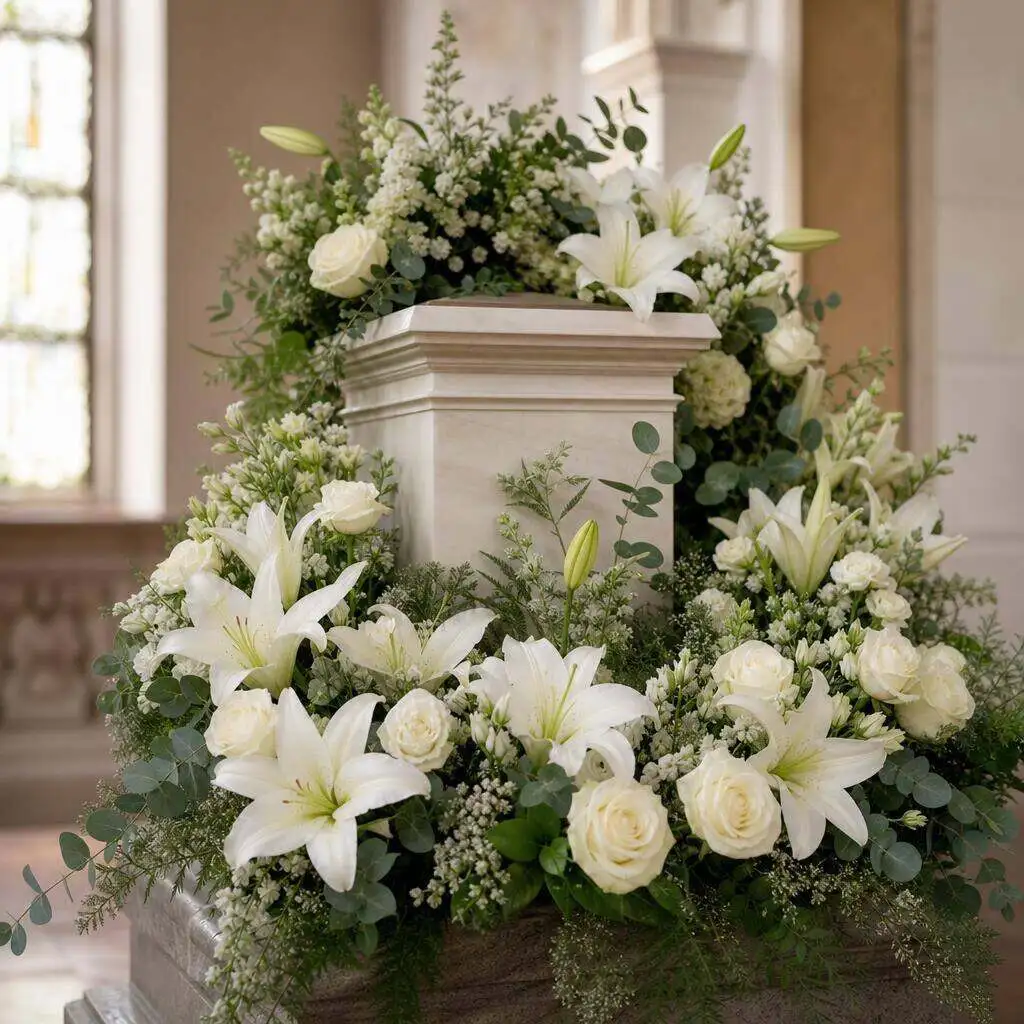
For families who value the environment or who found comfort in a natural or green burial, returning funeral flowers to the earth carries quiet symbolism. Rather than sending beauty to a landfill, composting lets the blooms nourish new growth, a gentle echo of the cycle of life that many find consoling. It is also simply the responsible thing to do with organic material. Whether you keep a backyard compost pile or use Genesee County yard-waste collection, composting is an easy, low-cost way to give the flowers a fitting end.
Separating what can and cannot compost
Only the natural parts belong in compost. Before composting, remove floral foam, which is plastic and never breaks down, along with wire, picks, plastic ties, ribbon, and any non-plant decorations. The flowers, stems, and greenery are all compostable green material. Chopping them into smaller pieces speeds decomposition. If your arrangement was built foam-free, this step is easy, another reason foam-free tributes appeal to eco-minded families. Dispose of the removed foam and plastics in the regular trash.
Composting options if you don't have a pile
Not everyone keeps a compost heap, and that is fine. Many Michigan municipalities, including areas around Burton and Flint, collect yard waste seasonally, and cut flowers can go in with leaves and grass clippings. Some communities have drop-off composting sites as well. If you would like the symbolism without the setup, even scattering chopped petals in a garden bed lets them break down naturally. However you do it, composting is a peaceful, unhurried task you can return to when you feel ready rather than something that must happen right away.
Planning Tips From Our Designers
- Remove foam, wire, ribbon, and plastics before composting.
- Chop stems and blooms to speed decomposition.
- Foam-free arrangements are the easiest to compost.
- Use municipal yard-waste collection if you lack a pile.
- Scatter chopped petals in a garden bed as a simple option.
Still have a question?
Ask a real floral designer. We answer every question personally, usually within one business day.
Ask A Floral DesignerPrefer to order flowers now? Shop the Bentley Florist collection — same-day delivery across Burton and Flint.
Keep Exploring